

![[Review] Onggii Opens 3rd Outlet at Square 2, Brings Korean Comfort Food like Gomtang and Galbi Jjim to Novena - Alvinology](https://alvinology.com/wp-content/uploads/2026/10/WhatsApp-Image-2026-10-28-at-1.51.05-AM-110x110.jpeg "[Review] Onggii Opens 3rd Outlet at Square 2, Brings Korean Comfort Food like Gomtang and Galbi Jjim to Novena")

![[Review] Osteria Mozza's New Home at ION Orchard Brings a Different Take on Pizza, Pasta and Italian Comfort Food - Alvinology](https://alvinology.com/wp-content/uploads/2026/10/osteria-mozza-11-110x110.jpg "[Review] Osteria Mozza's New Home at ION Orchard Brings a Different Take on Pizza, Pasta and Italian Comfort Food")
![[Review] HONOR X9e Pro Lands in Singapore with an 11,000mAh Battery That Doubles as a Power Bank - Alvinology](https://alvinology.com/wp-content/uploads/2026/10/honor-9xe-purple-06-110x110.jpg "[Review] HONOR X9e Pro Lands in Singapore with an 11,000mAh Battery That Doubles as a Power Bank")

Changi Airport is set to introduce a new way for passengers to board and disembark from flights parked at remote aircraft stands with the completion of its first satellite gate, a standalone boarding facility designed to improve comfort, accessibility and operational efficiency.
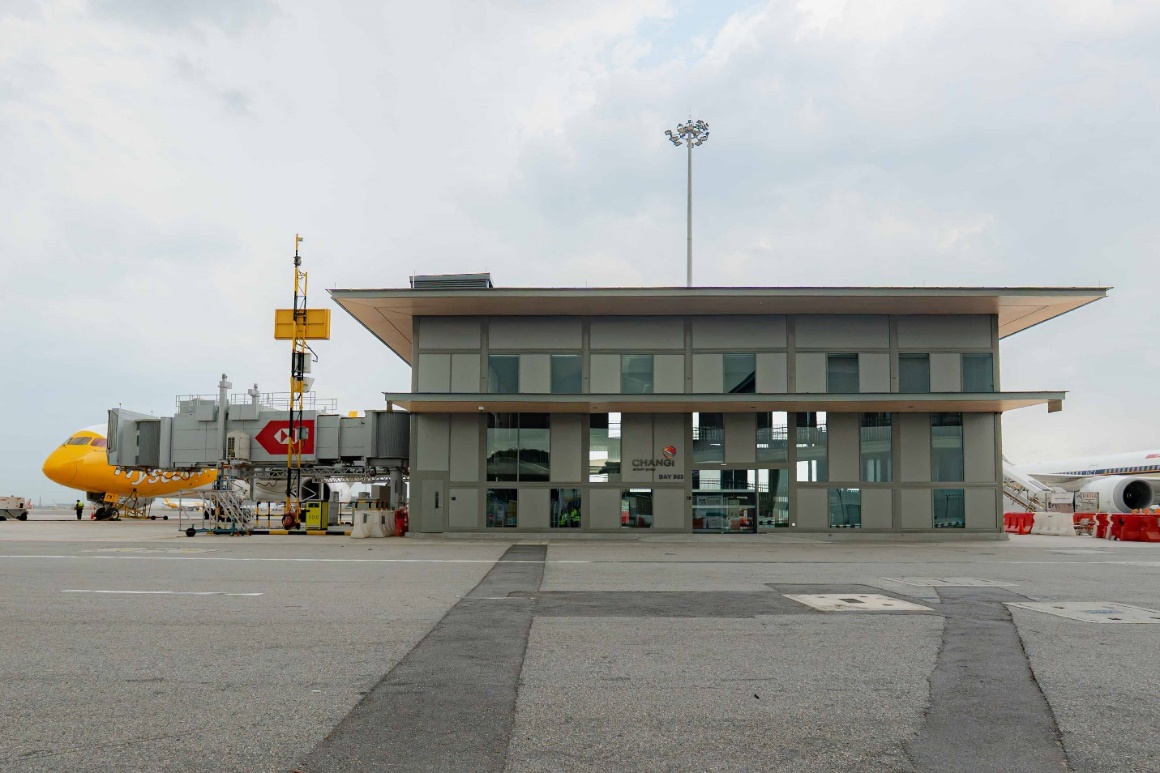
Developed by Changi Airport Group (CAG), the new satellite gate has completed construction and is currently undergoing final operational readiness preparations. It is expected to begin serving selected passenger flights by August 2026.
Located within the airport’s airfield, the facility is equipped with two aerobridges, allowing passengers travelling on flights assigned to remote parking stands to enjoy a fully sheltered, weather protected boarding and arrival experience. While around 98 per cent of passenger flights at Changi currently use contact gates with aerobridges connected directly to the terminals, the remaining flights operate from remote stands, requiring passengers to travel between the terminal and aircraft by bus. These remote stands play an important role in helping the airport maximise apron capacity during busy periods as airline traffic continues to grow.
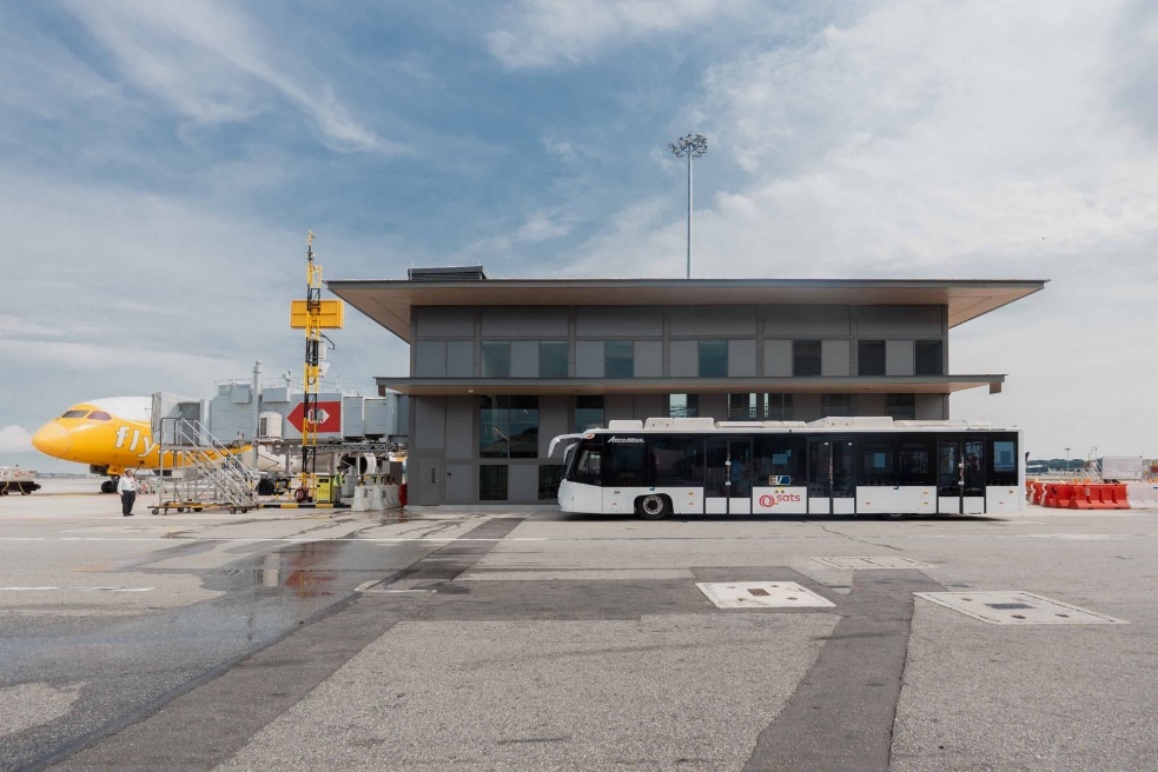
Covering approximately 200 square metres, about the size of a tennis court, the satellite gate is designed to accommodate both narrow body and wide body aircraft. The air-conditioned facility features a sheltered entrance canopy where passengers board and alight from buses before proceeding via a gently sloping 60 metre-ramp to the upper level, where two aerobridges provide direct access to the aircraft.
The ramp has been designed with accessibility in mind, making it easier for wheelchair users, seniors, families with strollers, young children and travellers with wheeled cabin luggage to move comfortably between the buses and aircraft.
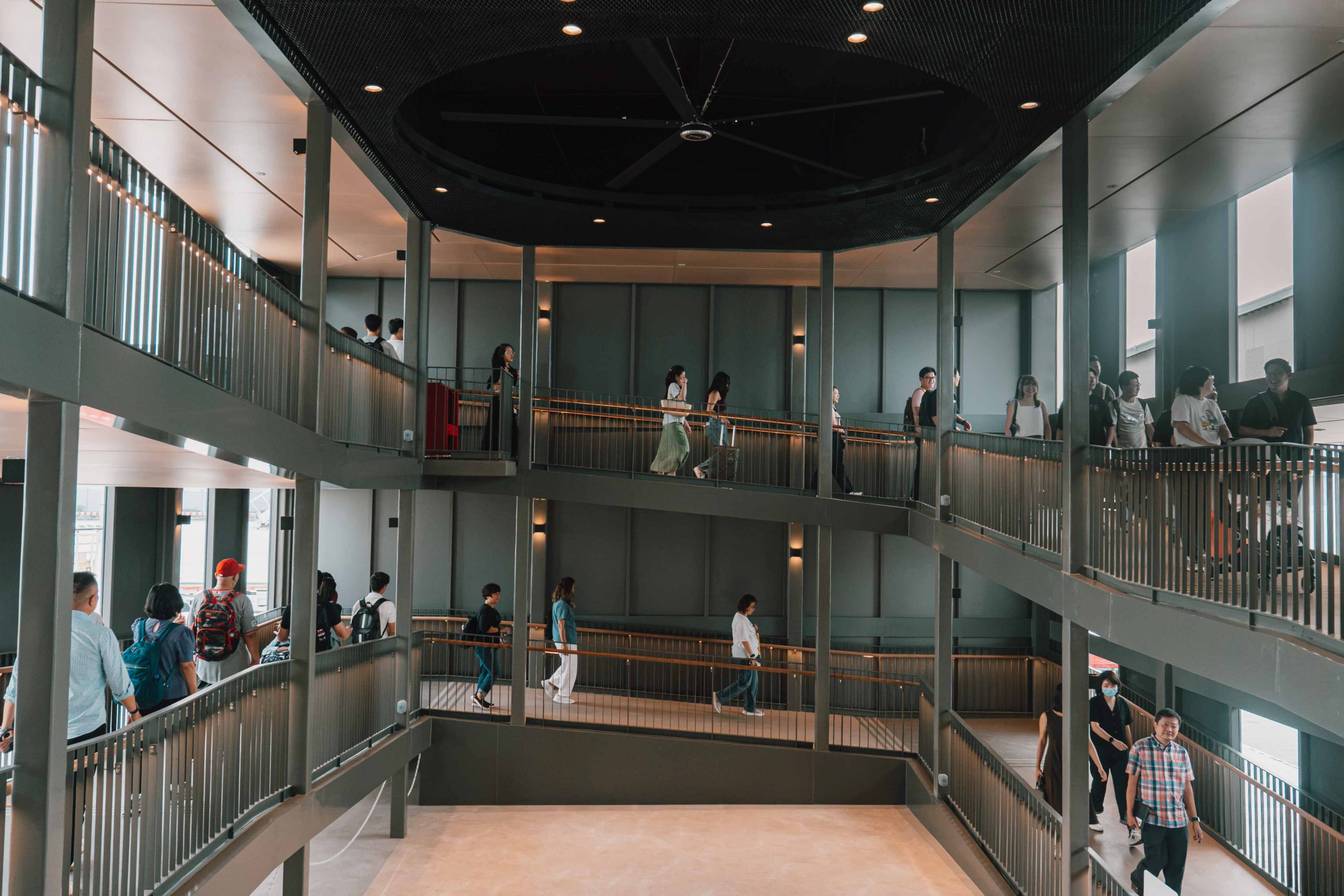
For departing flights, passengers will be transported by bus from the terminal to the satellite gate before boarding through the aerobridges. Upon arrival, passengers will leave the aircraft through the same sheltered facility before boarding buses that will take them back to the terminal.
Beyond enhancing the passenger journey, the satellite gate also provides a more comfortable working environment for airport personnel involved in remote flight operations, including ground handling teams, passenger service officers, auxiliary police officers and aircraft cabin cleaning staff.
The new facility also supports Changi Airport’s sustainability goals. Designed as a zero-energy building, it is powered entirely by rooftop solar panels, with electricity stored in a nearby off grid battery system. This reduces dependence on the airport’s main power supply while supporting more energy efficient ground operations.
Smart building technologies have also been incorporated into the facility. The air conditioning system activates automatically based on live flight schedules, ensuring the building is ready before passengers and crew arrive while minimising unnecessary energy use. The facility is also capable of detecting electrical faults and wirelessly transmitting maintenance alerts to teams at the main terminal, allowing faster response times.
To prepare for operations, CAG has conducted training sessions and dry runs since May 2026, involving more than 500 airport staff. These exercises have focused on familiarising personnel with all aspects of satellite gate operations.
Selected passenger flights will begin using the facility in the coming weeks as CAG evaluates the complete passenger journey, including bus transfers, sheltered boarding and arrival via aerobridges, accessibility for passengers with reduced mobility and coordination across ground handling operations. Insights gathered during these trials will help guide future plans for additional satellite gates at Changi Airport, with traffic demand and operational requirements among the factors that will shape future expansion.

![[PROMO INSIDE] Choosing the Right Mattress for our new house - why we chose Four Star - Alvinology](https://alvinology.com/wp-content/uploads/2021/08/four-star-2-19-1024x576.jpg "[PROMO INSIDE] Choosing the Right Mattress for our new house - why we chose Four Star")
![[Coming to Singapore] Echosmith – The rising star to look out for - Alvinology](https://alvinology.com/wp-content/uploads/2015/07/19532366060_edd9ba1a20_b-1024x683.jpg "[Coming to Singapore] Echosmith – The rising star to look out for")
![[Review] Nothing’s A Series Matures: Phone (4a), Phone (4a) Pro and Headphone (a) Deliver More Than Just a Pretty Face - Alvinology](https://alvinology.com/wp-content/uploads/2026/04/nothing-2026-09-1024x576.jpg "[Review] Nothing’s A Series Matures: Phone (4a), Phone (4a) Pro and Headphone (a) Deliver More Than Just a Pretty Face")