




ChatGPT became part of everyday life for more people in Singapore in 2026, supporting everything from cooking and sports preparation to event planning, learning and work, according to OpenAI’s first Asia Pacific “2026 in ChatGPT” report.
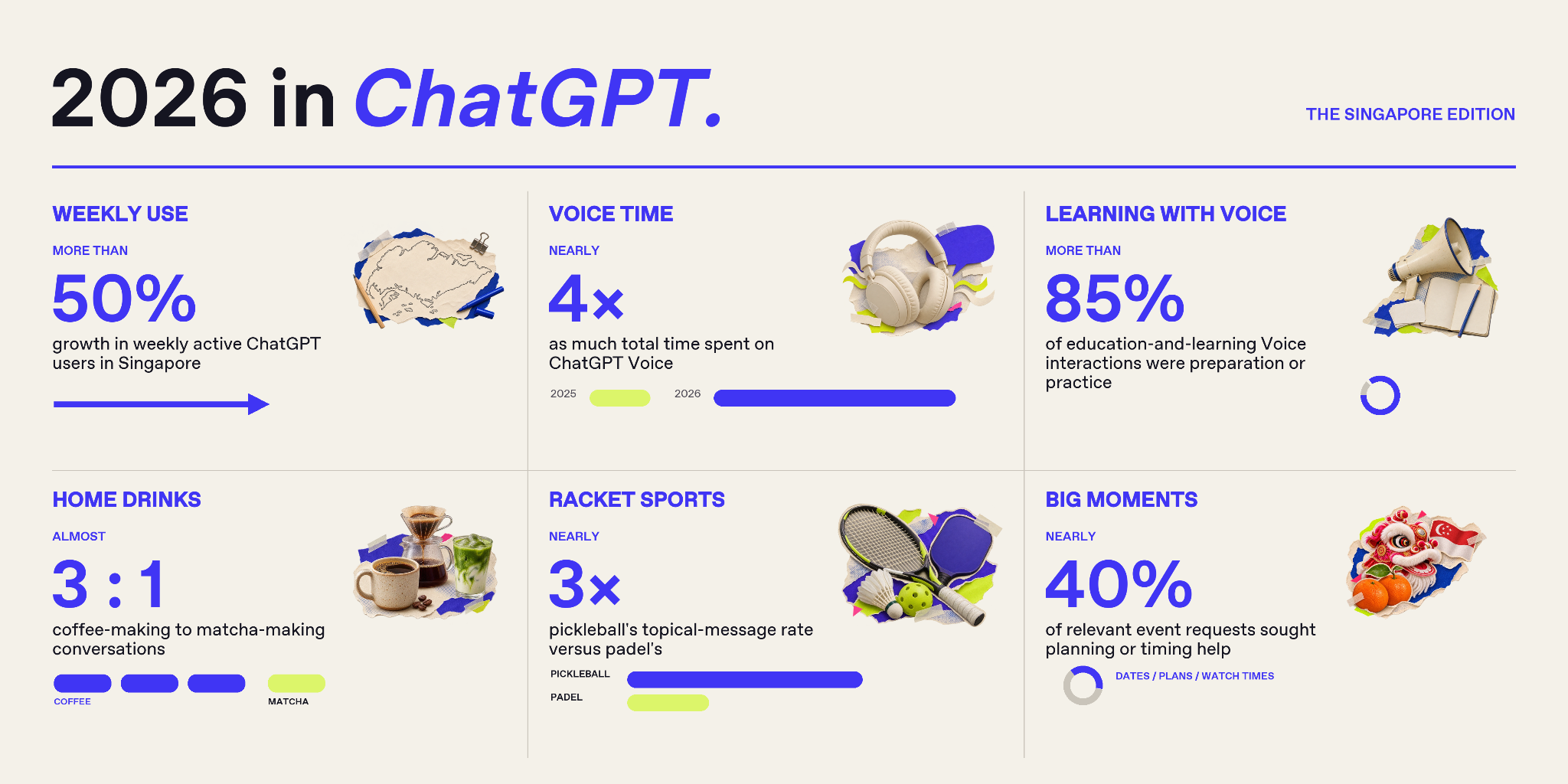
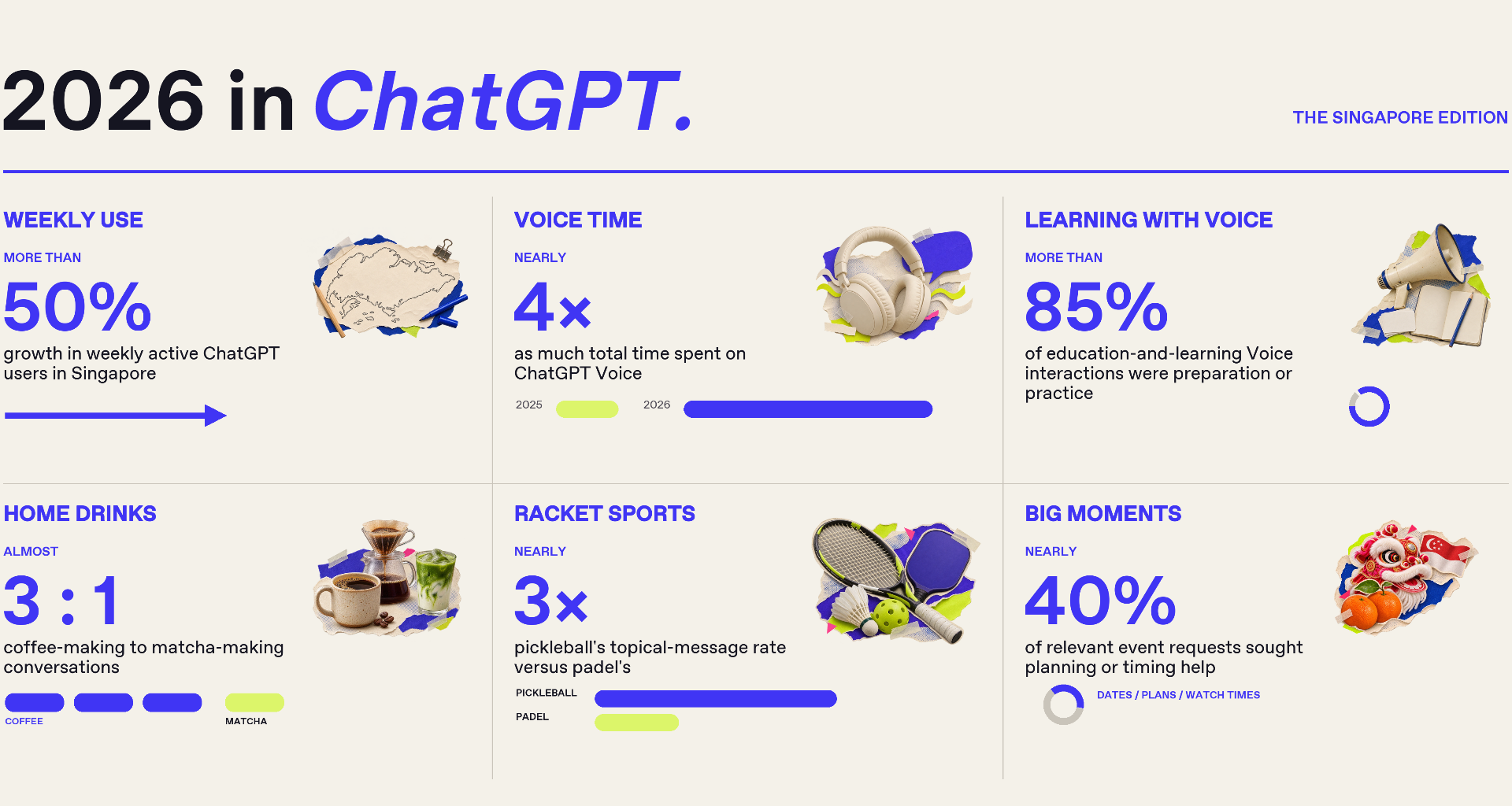
The report found that the number of people in Singapore using ChatGPT each week grew by more than 50% year on year. It draws on aggregated and anonymised usage data from selected periods in 2026 across Singapore, Thailand, Indonesia, Australia, South Korea, Japan and India, highlighting how people across the region used the AI tool to explore interests and complete everyday tasks.
Food and drink were among the popular topics in Singapore. Coffee was mentioned in home drink preparation conversations almost three times as often as matcha. For home cooking, boiled eggs, mashed potatoes, sourdough bread and chicken curry were among the most requested recipes. Cookies or biscuits, pancakes and stir-fried beef shared fifth place.
Boiled eggs were also a regional favourite, ranking first among sampled recipe requests in Singapore, Australia, India, Indonesia, South Korea and Thailand. The second most requested dish differed across markets. Singaporeans favoured mashed potatoes, while nasi goreng ranked second in Indonesia and biryani took the same position in India.
Sports also featured prominently in Singaporeans’ ChatGPT conversations. Football and running led the discussions, followed by basketball, swimming and esports. Pickleball attracted attention as part of a wider regional interest in racket sports. Among five racket sports compared in Singapore, tennis generated the most requests, followed by badminton and pickleball. Pickleball requests were nearly three times higher than those for padel.
Equipment selection was a common topic among people asking about pickleball and padel, accounting for nearly one in three relevant requests reviewed. ChatGPT was also used for fitness preparation. During Singapore’s HYROX race week, roughly one in three messages mentioning the event were related to training, preparation, nutrition or recovery.
Planning around major occasions was another recurring use. During periods surrounding Lunar New Year, National Day and the Singapore Grand Prix, nearly 40% of the event-related requests reviewed involved planning, checking dates or finding out when to watch.
Other markets showed different patterns around local celebrations. In Thailand, almost half of Songkran-related requests involved greetings, images or designs. In India, 68% of the Holi requests reviewed were related to creating images, designs or greetings.
Beyond leisure and personal interests, Singaporeans also used ChatGPT for productivity and information management. Singapore remained among the top countries globally for weekly ChatGPT use on a per-capita basis, with users increasingly exploring agentic tools to help complete tasks.
Singapore also ranked among the top five countries worldwide by the number of weekly active Dots users, alongside Japan and South Korea. Dots are ChatGPT’s always-on agents that can work across connected apps and bring results back for users to review. In addition, around one in four users in the Singapore data reviewed used ChatGPT to analyse a file or find information within it.
Voice usage also increased. The time Singaporeans spent using ChatGPT Voice was nearly four times higher year on year. Writing and communication accounted for the largest category of Voice interactions in the data reviewed, with translation and language assistance leading within that category. For education and learning, preparation and practice made up more than 85% of Voice interactions.
To mark the year, OpenAI is also introducing “Make it your own”, an experience that lets people look back on three things they did, tried or created with ChatGPT and turn them into a shareable “My 2026 in ChatGPT” Story. Users can select a theme and review the captions before generating the image.
OpenAI said the report’s findings are based on aggregated, anonymised ChatGPT usage data. The time periods and measurements vary across findings, while some topic-level insights are drawn from classified samples of messages.