
![[Review] Michelin-selected Unagi Yondaime Kikukawa Opens Second Outlet with a Show-Stopping Unagi Mountain - Alvinology](https://alvinology.com/wp-content/uploads/2026/10/unagi-raffles-city-25-110x110.jpg "[Review] Michelin-selected Unagi Yondaime Kikukawa Opens Second Outlet with a Show-Stopping Unagi Mountain")




Storing gold, jewellery, or documents? Learn 5 things to check before choosing a private vault in Singapore, from security to access, cost, and insurance.
Buying gold or preparing for a long trip can raise a practical question: where should valuables be kept?
For years, many people kept valuables at home or rented a box at the bank. Both look less certain today. Bank of East Asia stopped offering safe deposit boxes in Singapore in 2020, and other banks have cut back. Home break-ins are rare here, but they still happen. A private vault in Singapore is another option for people who would rather not leave valuables at home.
Here are five things worth checking before you commit to any option.
1. Security goes beyond a thick metal door
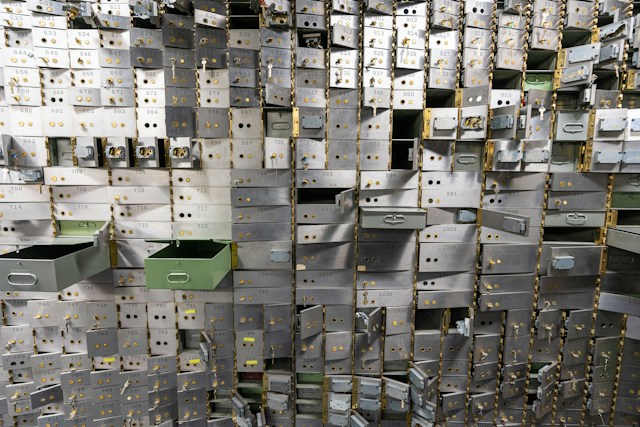
Protection comes down to two things: how hard it is to break in, and how tightly access is controlled. A heavy door means little if anyone with a copied key can walk up to it.
Singapore is consistently ranked among the safest cities in the world, yet no home is fully risk-free. In 2024, a run of break-ins at landed estates near the Rail Corridor and Bukit Timah Road saw syndicates make off with jewellery worth around S$3.85 million across 10 cases. Police stepped up patrols in response, but the incident was a clear reminder that keeping valuables at home still carries risk.
A home safe helps, but it is only as strong as its installation and your front door. Thieves also know the usual hiding spots.
Good private vault facilities use several layers of access control. At Vault@268 on Orchard Road, for instance, you tap an access card and clear a facial biometric check to enter a private room. At the kiosk, you use the card again and enter your PIN to request your box. Once the robotic system delivers it, your personal key opens the box. Staff do not handle it during retrieval.
Key questions to ask any provider:
- Who can physically enter the storage area, and is every entry logged?
- Is retrieval automated, or do staff handle the boxes?
2. Accessibility: can you reach it when you need it?
You may only need your box a few times a year, but timing matters when you do. A bank safe deposit box in Singapore is tied to branch opening hours, and availability can be limited.
If you travel often or run a business, you may need a document or an item at an awkward hour. This is where round-the-clock facilities pull ahead.
Vault@268, for example, offers 24/7 access through an ATM-style system, so retrieval does not hinge on office hours or staff being on site.
Ask yourself:
- How often will I realistically need to get to my items?
- Do the opening hours fit my schedule and travel habits?
- How far is the facility from home or work?
3. Cost: what you are paying for
Pricing depends on box size and provider. Bank boxes are usually billed once a year and paid upfront. Pricing at private vaults varies by operator and may include a minimum rental term or one-off charges at sign-up.
If a private vault costs more, decide whether the longer access hours are worth the difference.
Weigh the fee against:
- The replacement value of everything you are storing.
- Whether limited access hours would cause a problem.
- Any administration, registration or other one-off charges added at sign-up.
4. Insurance: know what is covered
It is easy to assume that anything stored in a bank or vault is automatically insured. As a rule, it is not: the fee covers the box, not what you put in it.
Most providers secure the facility itself, but the contents remain your responsibility. You may need a separate valuables or home contents policy, and it pays to read the fine print on coverage limits, on whether cash and gold are included, and on how declared value is treated.
Vault@268 states on its site that insurance is not included, and clients who want cover can arrange it through their preferred insurer.
Practical steps:
- List your items with photos and rough valuations.
- Confirm whether your current policy covers items held off-site.
- Ask the provider exactly what, if anything, their own insurance covers.
5. Check who runs the facility
Private vault storage means trusting a private operator, so check how long it has run, who owns it and what happens when something goes wrong.
Questions to ask:
- How long has the facility been operating, and who owns it?
- What happens during a power cut or a system fault?
- How is registration handled?
Vault@268 launched in April 2015 as a joint venture between the landlord of 268 Orchard Road and Ngee Ann Development, which developed the building. Its boxes are made by Gunnebo of Sweden, and you register in person at the sales office. You can store jewellery, gold, watches, documents and hard drives.
Before you sign up
Before paying for a box, get clear answers on access, charges, insurance and what happens if the automated system is unavailable. Then check the company behind the facility just as carefully.
You are trusting it with belongings you have chosen not to keep at home, so there should be no guesswork about how the service works or who is responsible for what.