




Singapore’s next generation of inventors is being recognised for developing solutions to everyday and societal challenges, as the James Dyson Award marks 20 years of supporting young innovators in the country.
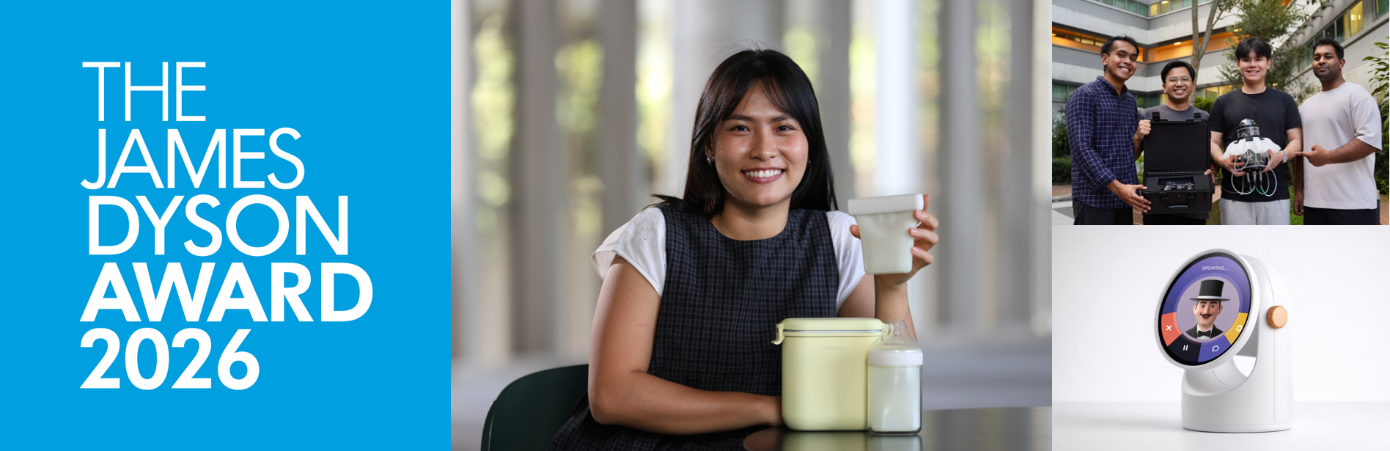
National University of Singapore (NUS) graduate Nicolette Wong Su-Ann has been named the Singapore National Winner of the James Dyson Award 2026 for mömigo, a reusable silicone breastmilk storage and feeding system designed to reduce the logistical and mental load of breastfeeding on the go.
NUS teams behind JellyBot and EmotiMate have been named National Runners-up. All three inventions will now progress to the international stage of the James Dyson Award, with the international Top 20 shortlist scheduled to be announced on 14 October 2026. The global winners will then be announced on 4 November 2026 and selected by Sir James Dyson.
This year marks two decades of the James Dyson Award in Singapore. Over the past 20 years, the programme has provided hundreds of students and recent graduates in Singapore with a platform to develop and showcase inventions using science, technology and design to address societal challenges.
Singaporean inventions have also made an impact at the international level. Since 2021, Singapore finalists have consistently been shortlisted in the Global Top 20. Local innovations HOPES and airXeed Radiosonde were selected by Sir James Dyson as Global Winners in 2021 and 2024 respectively.
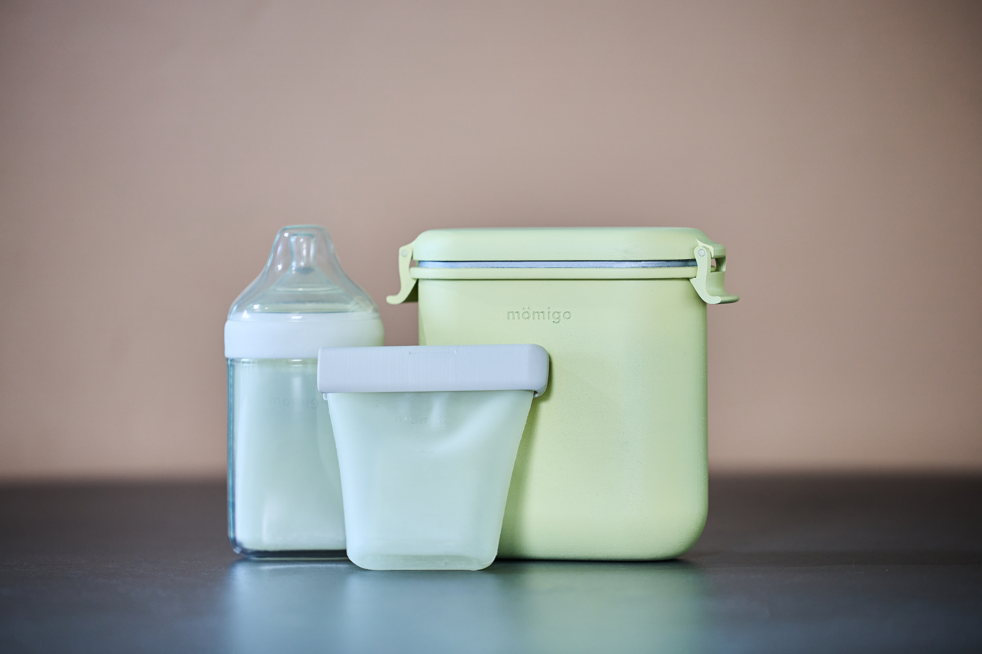
For Nicolette, the inspiration for mömigo came from watching her sister manage the practical challenges of breastfeeding while balancing caregiving, work and an active lifestyle. Using her industrial design expertise, the NUS graduate developed a system intended to simplify the process of storing, warming and feeding breastmilk.
mömigo uses a reusable silicone bag with a tapered shape that allows it to serve as both a storage container and feeding vessel. Once filled, the bag can be sealed into a compact profile for storage. When needed, it attaches to a warming component suspended inside an insulated flask, allowing the breastmilk to be warmed directly within the bag.
After warming, the same bag can be placed into a holder with a teat attached, allowing it to be used for feeding without transferring the milk between separate containers.
The design aims to reduce washing, spillage and packing requirements by removing unnecessary transfers during the feeding process. Nicolette developed mömigo over 10 months through research, interviews with parents and lactation consultants, prototyping and testing. The development process involved multiple iterations of materials, geometries and sealing mechanisms before arriving at the final design.
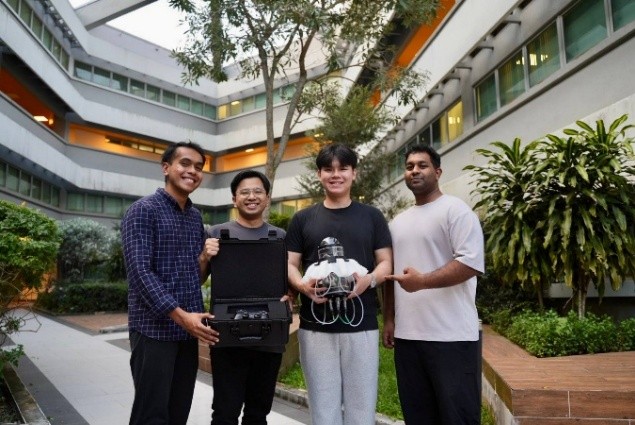
National Runner-up JellyBot addresses a different challenge, focusing on coral reef monitoring. Current monitoring methods can involve divers or conventional remotely operated vehicles (ROVs), which can be costly, disruptive and potentially harmful to fragile marine environments.
Developed by an NUS team, JellyBot is a soft robotic underwater vehicle inspired by the movement of jellyfish. Instead of conventional propellers, it uses pneumatic tentacles to move through sensitive underwater environments more gently.
The team estimates a target cost of approximately S$1,000 for JellyBot, compared with commercial ROVs that can cost between S$20,000 and S$60,000. The lower-cost design could make reef monitoring more accessible to researchers and conservationists. In Singapore, where coral reefs support marine biodiversity despite limited coastal habitats, the technology could provide a low-impact approach to monitoring reef health.
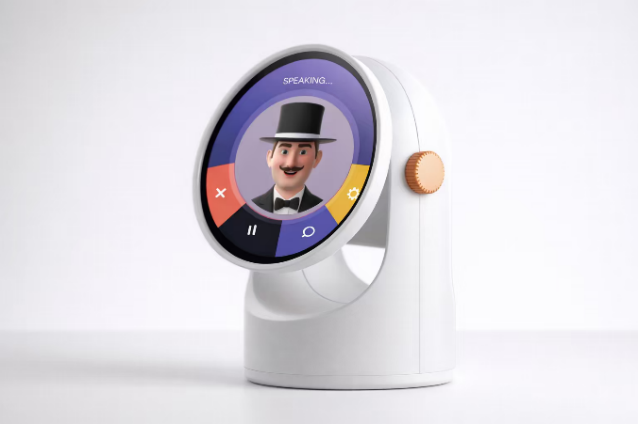
The other National Runner-up, EmotiMate, focuses on communication barriers experienced by deaf and hard-of-hearing individuals. While traditional speech-to-text and text-to-speech technologies can help convey information, they may not fully capture emotion, intent and context, potentially leading to misunderstandings.
Created by inventor Xincheng, EmotiMate is an AI-assisted tool that combines speech and text translation with emotional context. The system is designed to help users communicate both what they mean and how they mean it, with the aim of supporting more inclusive everyday interactions.
With mömigo, JellyBot and EmotiMate now moving forward to the international stage, Singapore’s finalists will have the opportunity to compete for global recognition at the 2026 James Dyson Award. The international Top 20 will be announced on 14 October, before the global winners are selected by Sir James Dyson on 4 November 2026.