

![[Review] Sight Lines' Sight Lines' Crack the Case: Wonderland Brings Colourful Chaos to Its Final Mystery - Alvinology](https://alvinology.com/wp-content/uploads/2026/10/WhatsApp-Image-2026-10-10-at-5.25.52-PM-110x110.jpeg "[Review] Sight Lines' Sight Lines' Crack the Case: Wonderland Brings Colourful Chaos to Its Final Mystery")



Changi Airport Group (CAG), together with ground handling partner SATS Ltd, has begun the first phase of deploying autonomous wheelchairs at Changi Airport following successful trials, marking a new step in improving the travel experience for passengers with reduced mobility.
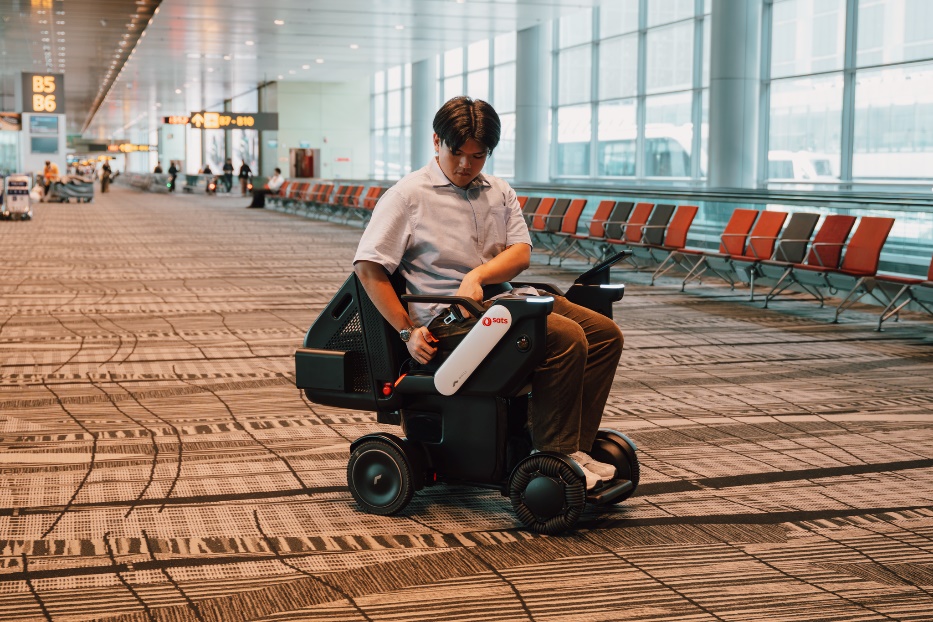
The autonomous wheelchairs, operated and managed by SATS, allow eligible passengers to move through airport terminals with greater independence while reducing the need for one-to-one staff assistance. The service complements existing mobility support, enabling ground staff to dedicate more time to passengers who require higher levels of care and personalised assistance.
The rollout comes as demand for special assistance services continues to rise. Changi Airport recorded a 20 percent increase in requests for wheelchair assistance between 2023 and 2025, driven by an ageing population and the continued growth in air travel. Meeting this increasing demand through conventional wheelchair services requires significant manpower and coordination across multiple airport touchpoints.
The deployment forms part of SATS’ Hub Handler of the Future operating model and is expected to support around 10 percent of Changi Airport’s daily mobility assistance demand. The initiative also reflects Changi Airport’s broader efforts to create a more inclusive and seamless travel experience by using automation and technology to improve operational efficiency while meeting growing passenger needs.
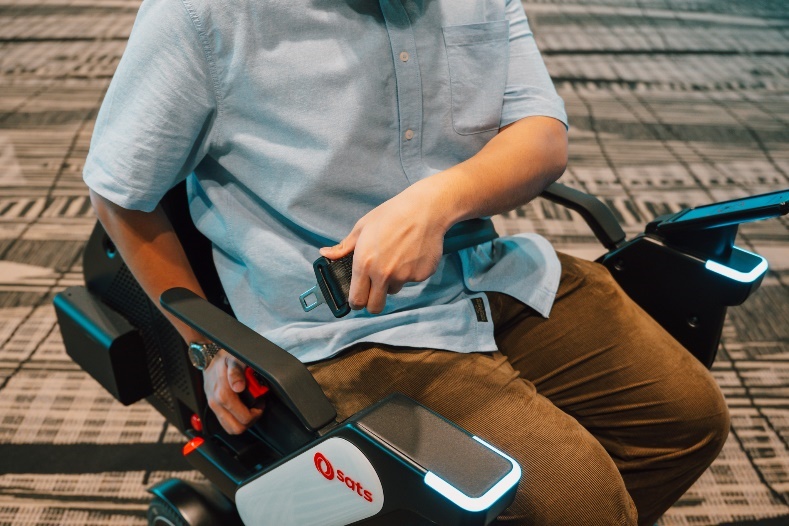
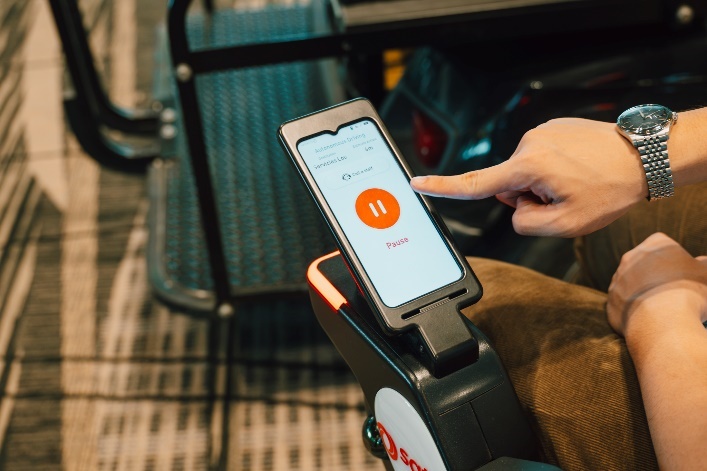
Designed for safe and comfortable travel within the airport, the autonomous wheelchair is equipped with advanced sensors that detect obstacles and surrounding pedestrian traffic while following customised routes. Omni directional wheels allow for smooth and precise movement through busy terminal spaces. Safety features include seatbelt monitoring, which prevents the wheelchair from moving until the seatbelt is securely fastened, an emergency stop button, and an assistance call function. Each wheelchair also includes a rear basket that can accommodate cabin sized luggage.
The autonomous wheelchairs currently transport passengers with reduced mobility along predefined routes within departure transit areas. Every journey is monitored in real time by a SATS ground handling supervisor at a control centre, ensuring passenger safety while allowing frontline staff to be deployed more efficiently.
Passenger trials first began in Terminal 3 in March 2025 before expanding to Terminal 2. During the trial period, the technology was tested across different operating environments and passenger journeys. More than 13,000 passengers have used the autonomous wheelchairs since the trials started. Selected passengers requiring wheelchair assistance who were able to walk short distances independently and were travelling on participating flights were invited to take part, with trained staff available throughout the journey whenever support was needed.
Before passenger trials commenced, CAG led extensive testing to ensure the autonomous wheelchairs could operate safely within the airport environment. Working closely with SATS, the evaluation covered speed controls, passenger safety and comfort, obstacle detection, and navigation performance. CAG also organised learning visits and industry engagements to study how autonomous wheelchairs were being used at other airports and to assess their suitability for deployment at Changi Airport.