




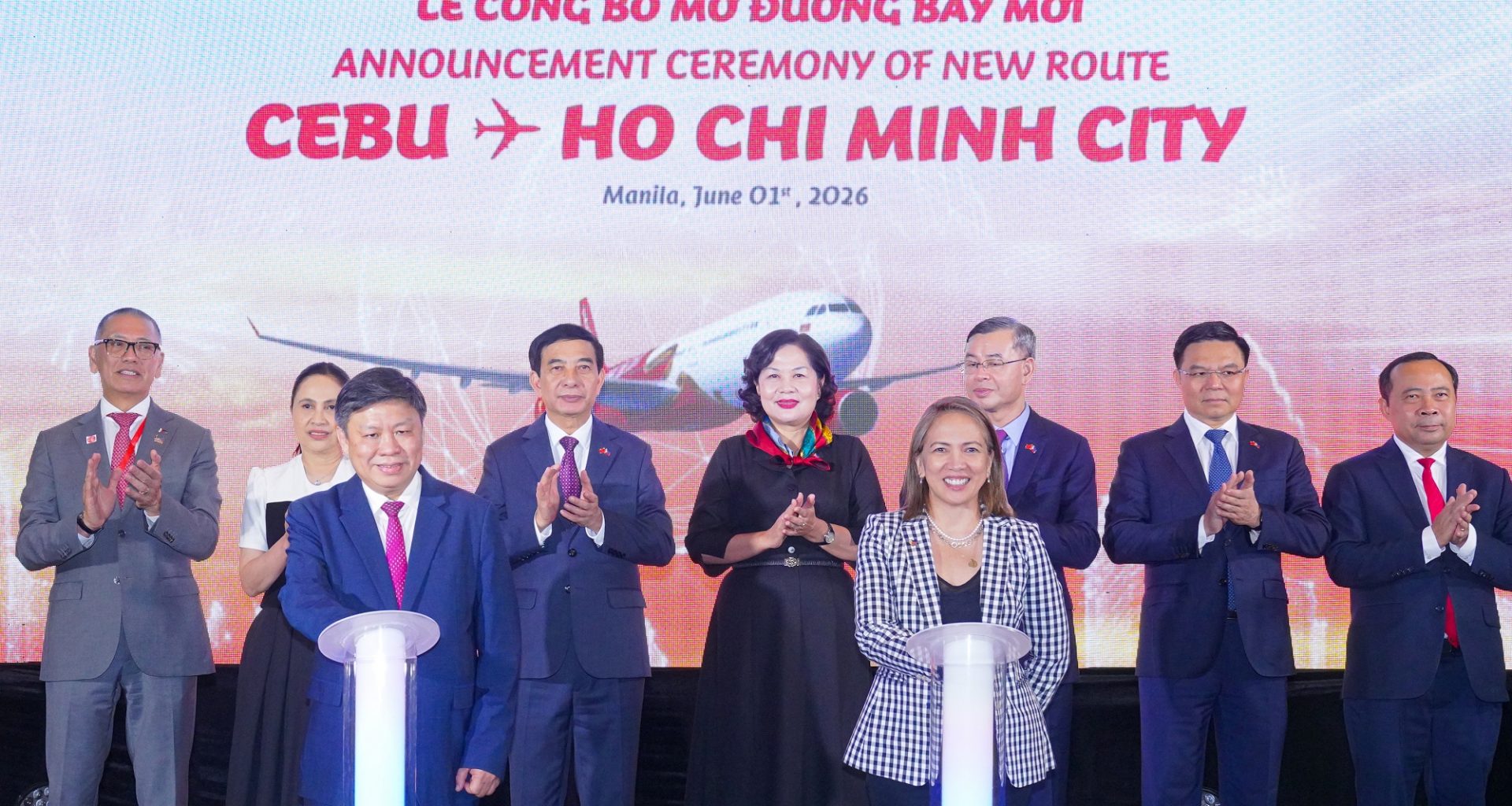

Vietjet has announced a new direct air route connecting Ho Chi Minh City, Vietnam’s largest metropolis and commercial hub, with Cebu, one of the Philippines’ key economic and tourism centres, marking another expansion of its international network across ASEAN.
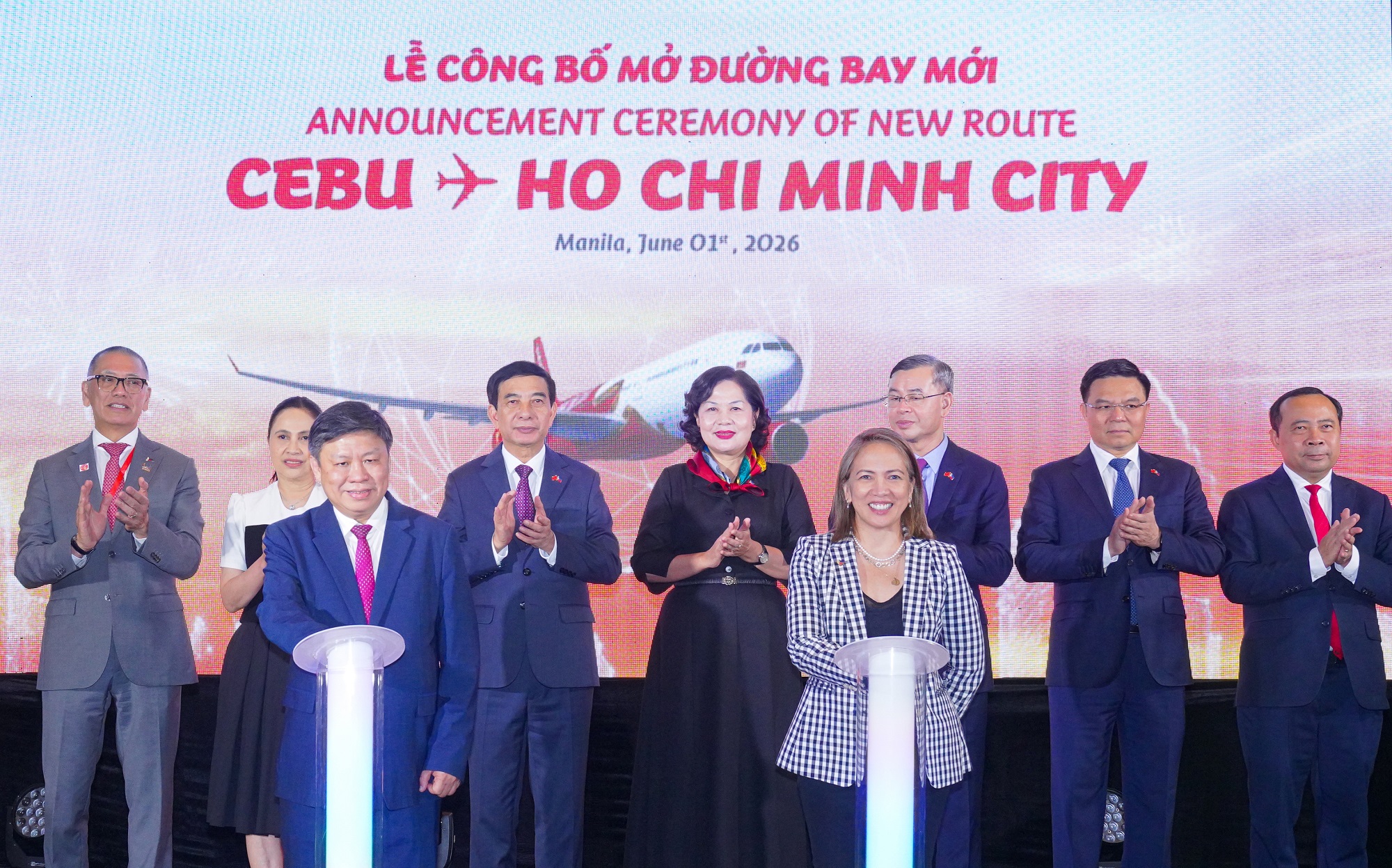
The announcement was made at the Vietnam Philippines Business Forum in the presence of Vietnam’s Deputy Prime Minister Phan Van Giang and senior leaders from both countries, during the state visit of Vietnam’s General Secretary and President To Lam to the Philippines.
The new service is scheduled to begin operations on December 11, 2026, with five round-trip flights per week. It will effectively double Vietjet’s capacity on the Vietnam Philippines market and expand travel options between the two countries. The launch follows the earlier introduction of the Ho Chi Minh City to Manila route in late 2025.
Cebu, the oldest city and former capital of the Philippines, is widely regarded as a major economic and tourism hub. It is known for its cultural and historical significance as well as its island resorts and serves as a gateway to popular destinations such as Bohol, Boracay and Palawan. Ho Chi Minh City continues to serve as Vietnam’s primary economic centre and a major transit point, offering onward connections to destinations across Asia, Australia and Europe through Vietjet’s wider network.
Air connectivity between Vietnam and the Philippines has grown rapidly in recent years, supporting stronger economic and tourism ties. Official Vietnamese statistics show bilateral trade reaching 7.8 billion US dollars in 2025, with both countries targeting 10 billion US dollars in the coming years. In the first four months of 2026, Vietnam welcomed 236,000 visitors from the Philippines, marking a 73.4 percent increase year on year and placing the Philippines among Vietnam’s top ten international source markets for the first time.
Since 2019, Vietjet has operated multiple routes linking major cities in both countries, including Hanoi, Ho Chi Minh City and Da Nang with Manila, Davao and Cebu. These services have played a key role in boosting tourism, trade, investment and people to people exchanges between the two fast growing Southeast Asian economies.