






With rising fuel costs, stricter carbon emissions targets, and growing support for cleaner transport, it’s no surprise that many Singapore-based companies are transitioning to electric vehicles (EVs). Indeed, support for EVs is now at an all-time high in Singapore, with EVs now representing around 40% of new vehicle registrations in 2025.
It’s worth mentioning that business fleets comprise a large portion of EV registrations, and it’s easy to see why. The proven operational savings and potential regulatory incentives in Singapore make adoption a no-brainer.
However, fleet electrification involves more than simply replacing diesel or petrol vehicles with electric alternatives. New variables, including charging infrastructure, route planning, maintenance cycles, and total cost considerations, must be taken into account. Without a clear understanding of these factors, businesses may struggle to fully realise the benefits of EV adoption.
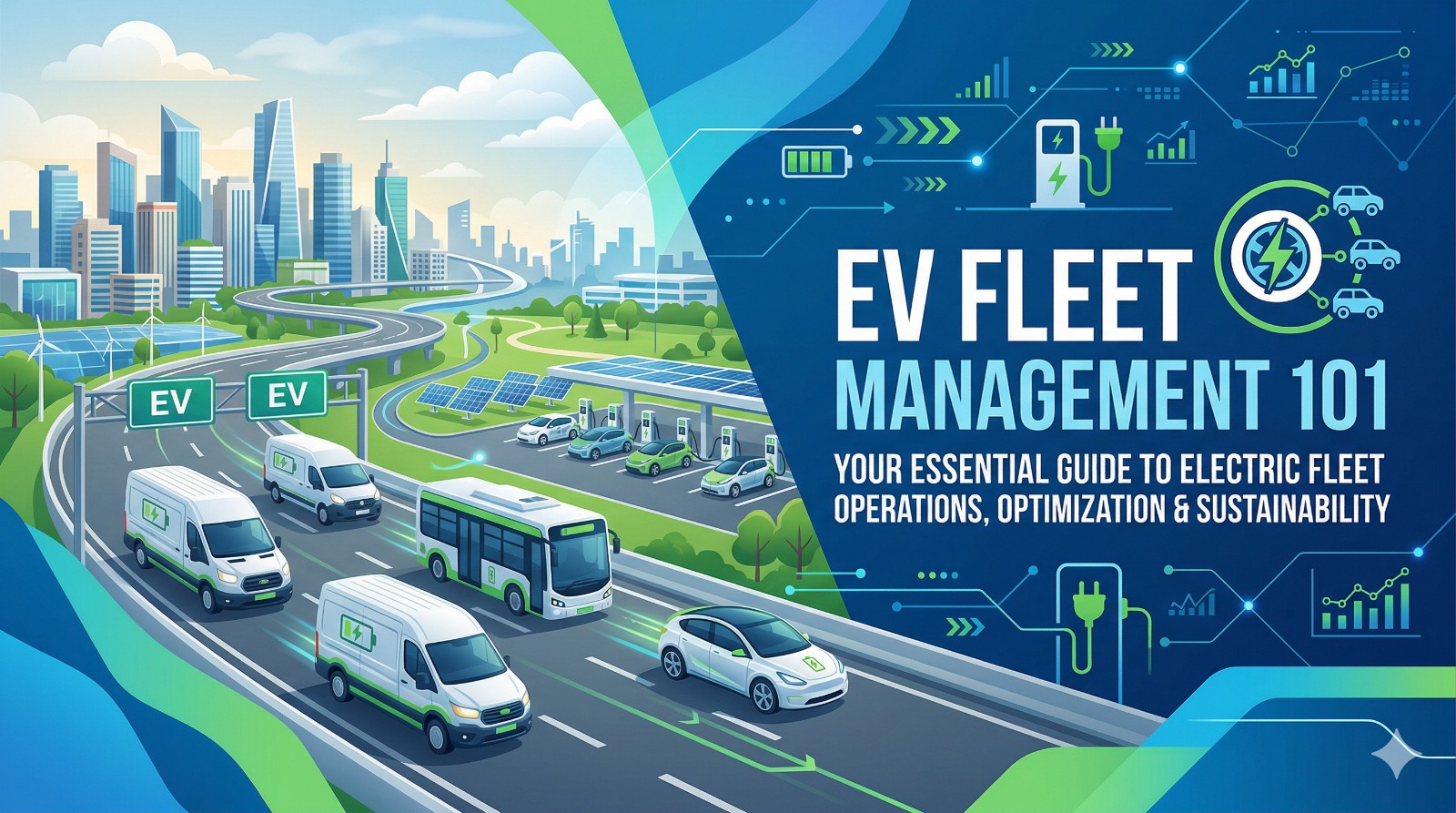
To make your shift more practical, it helps to focus on the key EV fleet management areas that shape how an EV fleet performs day to day:
1) Start with a Clear Understanding of What EV Operations Need
Every transition to electric vehicles should begin with a close examination of how the vehicles are intended to be used, as well as the proven performance envelopes of the EVs the business intends to acquire. Delivery routes, daily mileage, payload requirements, and necessary downtime windows all play a role in determining whether EVs are suitable for specific tasks.
Short, predictable routes with frequent stops often work well for electric commercial vehicles, and this is something that’s especially relevant to Singapore’s urban environment. Range anxiety is not as much of an issue in Singapore, given the country’s small size, but operations that require extended time on the road or irregular travel patterns may still need a more gradual transition. In any case, keeping vehicle selection aligned with real-world usage increases the odds of a successful adoption.
2) Plan Charging Infrastructure Around Your Workflow
Businesses must decide whether to rely on depot-based charging (possibly on one’s own premises), public charging networks, or a combination of both. Fortunately, Singapore-based businesses have viable options for all of these, with land availability really being the only limiting factor if the business wants to have its own depots.
In any case, overnight depot charging can work well for fleets with fixed schedules, while access to public chargers adds flexibility during the day. Understanding a business’s natural downtimes (such as loading periods or off-peak hours) and planning charging strategies and infrastructure around these helps minimise disruption and keeps vehicles ready when they’re needed most.
3) Understand Total Cost of Ownership Beyond Upfront Price
One of the most common misconceptions about EVs is that they are simply more expensive than traditional vehicles. This is no longer strictly true thanks to emerging market entries. However, even in cases where a modern EV model is more expensive than a comparable diesel or petrol vehicle, the total cost of ownership (TCO) is still often in favour of the EV.
To start, electric vehicles typically have far fewer moving parts, which can lead to lower maintenance costs over time, especially if the provider also offers solid after-sales service. Energy costs are also generally more predictable compared to fluctuating fuel prices, as EV chargers can also be powered through renewable sources. In Singapore, adopting EVs may also enable businesses to enjoy government incentives. Operationally, EVs can also offer potential reductions in downtime, pushing the economics further in their favour.
4) Train Drivers and Teams on EV-Specific Practices
Switching to EVs necessarily requires a shift in how drivers and operations teams approach their work. To start, emphasizing the importance of smooth acceleration, regenerative braking, and efficient use of onboard systems can all help extend battery life and improve performance. At the same time, teams responsible for scheduling and dispatch need to understand each EV’s charging requirements and range limitations to avoid disruptions to everyday operations.
5) Monitor Fleet Performance with Real-Time Data
Modern EVs designed for fleet operators are often equipped with advanced telematics, offering businesses up-to-the-minute visibility into fleet performance. When the systems are set up correctly, businesses can gain insights into energy usage, driving behaviour, vehicle health, and actual charging patterns. With these metrics, companies can identify inefficiencies, adjust operations, and make data-driven decisions about fleet expansion, usage optimisation, and even driver safety.
6) Consider Flexible Access to EV Fleets
Not every business needs to own its fleet outright to benefit from electrification. Leasing or renting electric commercial vehicles can provide a more flexible entry point, allowing companies to test different models and scale their fleet based on demand. This approach can be particularly useful for reducing upfront investment while still enabling access to the latest EV technology, making it easier to adapt as operational needs evolve.
7) Look into a Long-Term Transition Strategy
Electrifying a fleet in Singapore is fairly straightforward thanks to ample existing EV charging infrastructure and the country’s compact size. Even day-trips to Malaysia are not really an issue, as the Johor side also has plenty of charging stations.
Even so, these transitions are rarely a one-step process. A phased approach allows businesses to integrate EVs gradually, learn from early adoption, and refine their usage strategy. If capital is limited, starting with a pilot programme or a subset of vehicles can provide valuable insights into real performance, costs, and operational impacts. From there, companies can expand their EV fleet without serious risks of overcommitment.
It’s Time for Smarter, Greener Fleet Decisions
Ultimately, managing an EV fleet effectively requires more than just adopting new vehicles. A shift in mindset and a keener understanding of operational realities is also key to success. With a properly weighted approach, your business’s transition to an EV fleet can become a lasting advantage in the evolving Singaporean market.

![[PROMO CODE INSIDE] Enjoy 50% OFF truck delivery cost at IKEA with a minimum spend of $250 - Alvinology](https://alvinology.com/wp-content/uploads/2021/08/IKEA-Delivery-Promo-KV-1024x538.jpg "[PROMO CODE INSIDE] Enjoy 50% OFF truck delivery cost at IKEA with a minimum spend of $250")