






WhatsApp has unveiled a fresh wave of updates aimed at giving users greater control over their chats, smoother device transitions, and more expressive ways to communicate. As conversations grow and media accumulates over time, the platform is introducing new tools to make messaging more organised, flexible, and intuitive across devices.
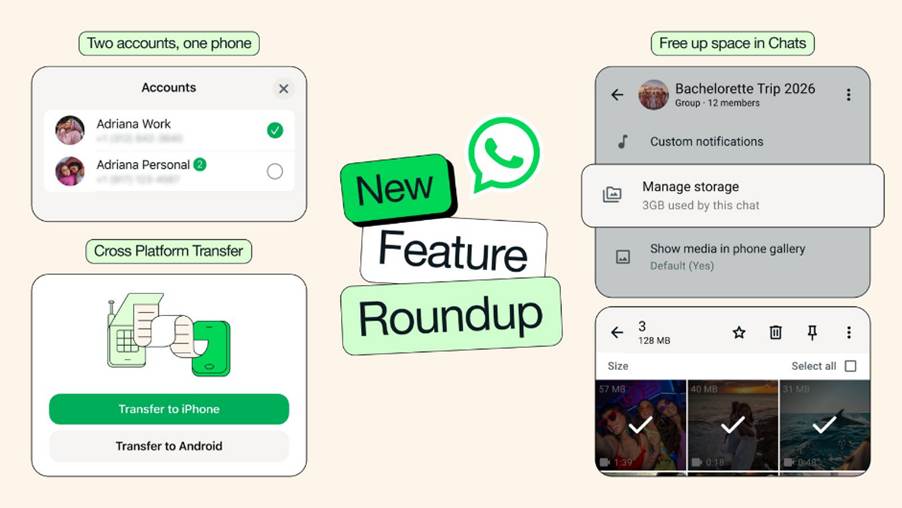
Here’s a look at the latest features rolling out:
Smarter Storage Management
To help users manage growing chat storage, WhatsApp now lets them identify and delete large files within individual chats. Instead of wiping an entire conversation, users can selectively remove media while keeping their message history intact, offering more precision and control over what stays on their devices.
Seamless Cross-Platform Chat Transfers
Switching phones just got easier. WhatsApp’s chat transfer feature has been expanded to support moving chat history from iOS to Android, in addition to same-platform transfers. Messages, photos, and videos can now be securely transferred across operating systems in just a few steps.
Two WhatsApp Accounts on One iPhone
iOS users can now run two WhatsApp accounts on a single device, a feature previously available only on Android. This allows users to separate work and personal chats without the need for a second phone. A clear profile indicator ensures users always know which account they’re messaging from.
Sticker Suggestions for More Expressive Chats
WhatsApp will now suggest relevant stickers based on emojis users type, making expressive replies faster and easier. The feature aims to bring more fun and personalization to everyday conversations.
Meta AI Photo Editing
Meta AI is now integrated directly within chats for enhanced photo editing. Users can remove unwanted elements, switch up backgrounds, or apply creative effects before sending images. These AI-powered enhancements are rolling out gradually and may not be available to all users immediately.
Upgraded AI Writing Help
Writing Help is receiving new capabilities, including suggested replies based on the context of an ongoing conversation. This allows users to draft responses more efficiently, all while keeping messages private.



![[PROMO] Mistral Celebrates 55th Anniversary in Singapore, Launches New Stand Fan at Promotional Price of S$55 - Alvinology](https://alvinology.com/wp-content/uploads/2023/09/WhatsApp-Image-2023-09-24-at-6.57.13-PM-1024x768.jpeg "[PROMO] Mistral Celebrates 55th Anniversary in Singapore, Launches New Stand Fan at Promotional Price of S$55")