




Image Source: Unsplash by I’M ZION
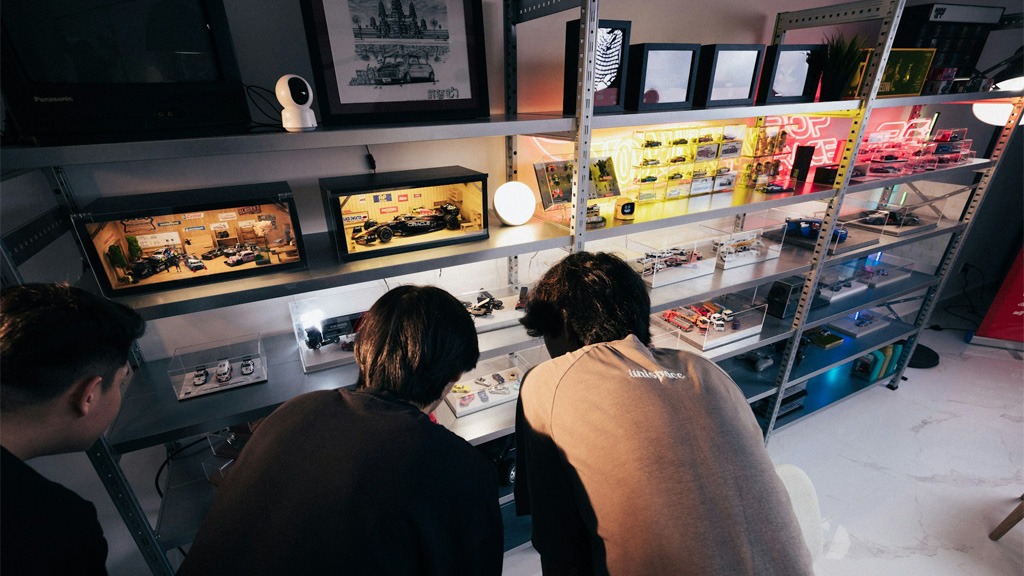
The shelf took three years to fill. The lighting went up in one afternoon, and it shows. It happens to many collections. Every Gunpla kit gets posed, every blind-box figure gets turned to its good side, and then a bargain LED strip goes along the top edge. Glossy armor turns into hot white spots, and the reds drift toward orange. Worse, the strip itself ends up as the brightest thing in the room.
Good display shelf lighting does the reverse. It makes the collection the clearest thing on the shelf, then stays out of the way. Museums have been working on this problem for decades, and their rules shrink down surprisingly well to a cabinet in an HDB flat.
Pick LED Lighting That Protects Collectibles From Fading
LED is the safest choice for a collection, and daylight is the riskiest. Museums Galleries Scotland names white LED light as the preferred choice for museum displays because it gives off minimal ultraviolet and infrared radiation. Daylight carries a lot of UV. So the first fix costs nothing: move the shelf out of direct sun. (That window baking your living room every afternoon does your box art no favors.)
LEDs don’t make light harmless, though. Visible light fades color too, and the materials collectors love to sit in the most sensitive group. Museums & Galleries of NSW lists plastics, rubbers, paper and photographs as “very light sensitive”, with a suggested maximum of 50 lux. That’s about as bright as a living room in the evening.
The Canadian Conservation Institute explains that damage adds up as brightness multiplied by time, so 100 lux for 400 hours does the same harm as 50 lux for 800 hours. Not every figure needs museum discipline. Sealed boxes and graded cards, though, are worth the effort.
Put the shelf lights on a timer or smart plug, so they run when someone is home to look, because a cabinet glowing all day in an empty flat is lighting for nobody.
Get Color Temperature and CRI Right for Display Cabinet Lighting
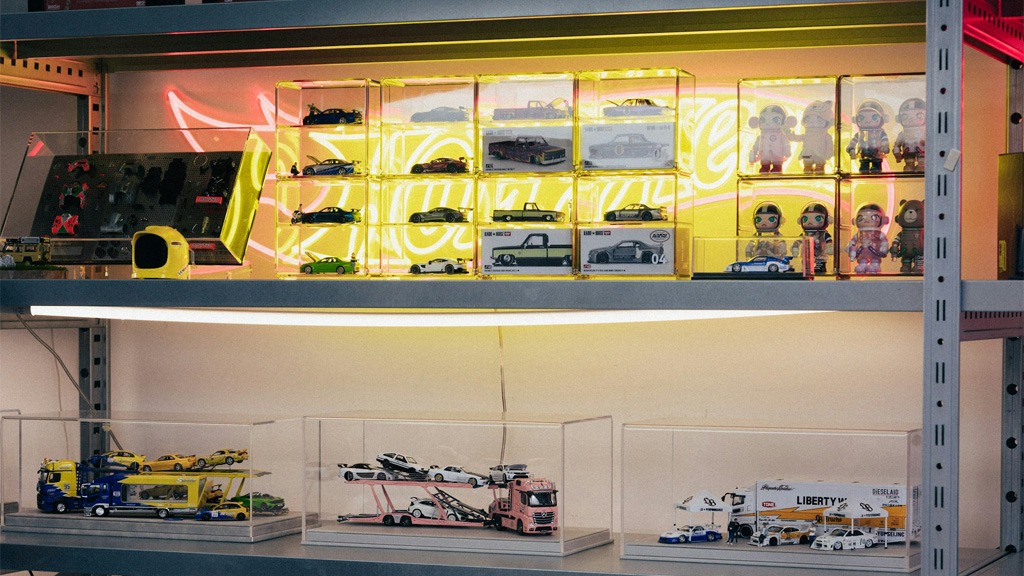
Image Source: Unsplash by I’M ZION
For most collections, a white between 2700K and 4000K with a CRI of 90 or higher is the safe choice. Kelvin (K) tells you how warm or cool the light looks.
CRI, the color rendering index, tells you how faithfully it shows color on a scale up to 100. Low-CRI strips push reds towards orange and yellows towards green, which explains that slightly off box art.
Pick the warmth to suit the collection:
- 2700K to 3000K (warm white) for wooden shelves, vintage toys and mixed collections
- Around 4000K (neutral white) for white mecha armor, chrome and clear parts
Whichever color temperature you choose, look for CRI 90 or above and a dimmer. Skip the cool 6000K strips, which make a living room feel like a convenience store at midnight.
Be a little skeptical of CRI claims on unbranded LED strip lights, too. A listed figure on a spec sheet beats a “high CRI” sticker.
Angle Shelf Lights to Stop Glare on Glass and Glossy Figures
Light from the front and above, at roughly 30 degrees, gives the cleanest result. Lighting designers call this the museum angle. ERCO, the German lighting manufacturer, rates it as ideal because it shows form well and avoids reflected glare on glass and shiny surfaces. Go steeper, and every chin and cape casts a harsh shadow. Go shallower, and the reflection lands straight in your eyes.
On a shelf, that means mounting the strip at the front edge of the shelf above, angled back towards the pieces, rather than along the back wall pointing out at you. Backlighting looks dramatic in photos, but it turns figures into silhouettes.
An aluminum channel with a frosted diffuser hides the individual LED dots, since each dot shows up as a tiny reflection on glossy paint. In glass cabinets, run the light down the inside front corners so the glass stays clear.
Where a Neon Sign Belongs on a Collector’s Shelf
Treat a decorative glow as the shelf’s title card. Galleries hang a label beside the work rather than on top of it, and the same logic works at home. A short word or name above the cabinet gives the wall a focal point while the display shelf lighting does the actual showing.
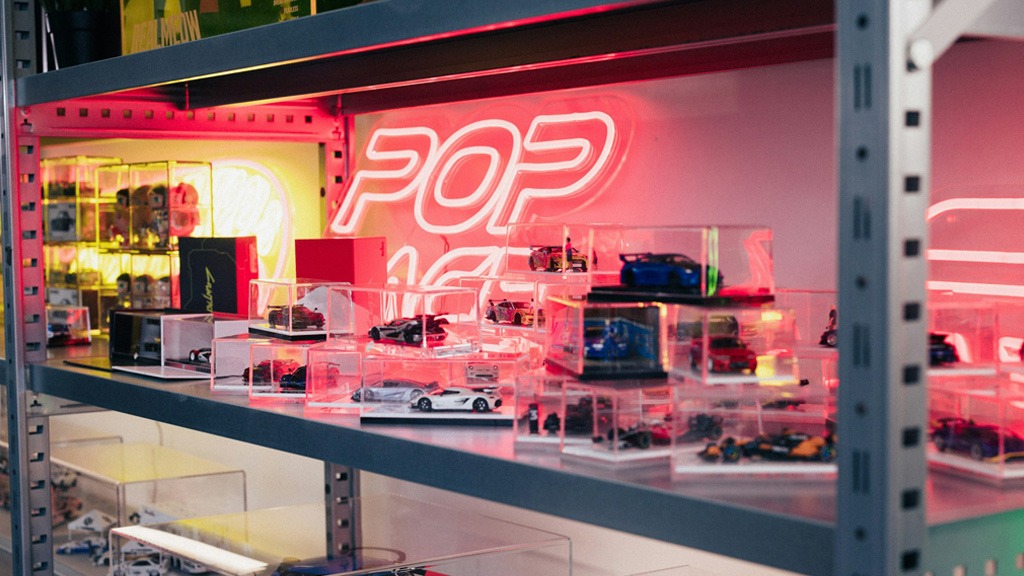
Image Source: Unsplash by I’M ZION
LED neon suits this job because it runs on low voltage, usually 12V or 24V, and stays cool to the touch so that it can sit near plastic kits without worry. And because custom neon signs can be sized to fit the wall, a slim piece works even in the narrow gap between a cabinet top and the ceiling.
A few rules keep it from stealing the show:
- Mount it at least a hand’s width above the top shelf, or on the wall beside the cabinet
- Keep it dimmer than the shelf lights, ideally on its own dimmer
- Choose white or one accent color pulled from the collection, since a pink glow will tint white armor pink
Use your own words rather than a franchise logo or character lettering. Those designs are usually protected by trademark or copyright, and a phrase you came up with (“The Vault”, say, or your own name) says more about the person who built the shelf.
Layer Your Display Shelf Lighting for Viewing and Photos
Think in three levels. Keep room lighting low, make the shelf lights the brightest thing in that corner, and keep the sign the softest of all. Give each layer its own switch or smart plug so you can easily adjust the balance.
The separation pays off when you photograph the collection. Switch off the sign and the room lights, leaving only the shelf lights on.
Then shoot straight on with the camera a little lower than the lights, so reflections bounce away from the lens. A coloured glow looks lovely in person but is hard to fix in an edit, so let the neutral white you picked do the work.