





Google is deepening its partnership with Singapore to advance artificial intelligence in healthcare and scientific research, announcing a series of initiatives spanning medical decision support, predictive healthcare and AI research talent development.
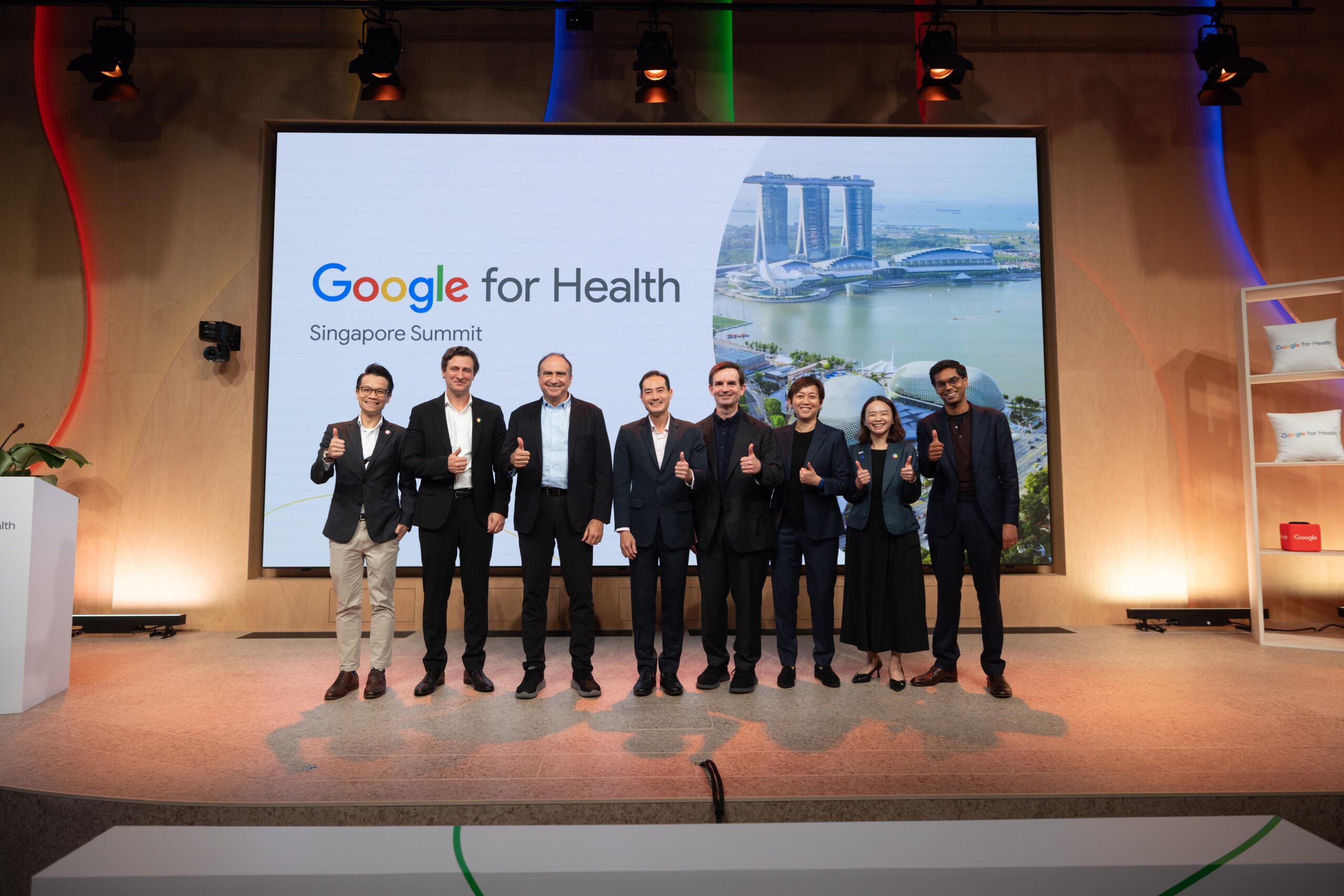
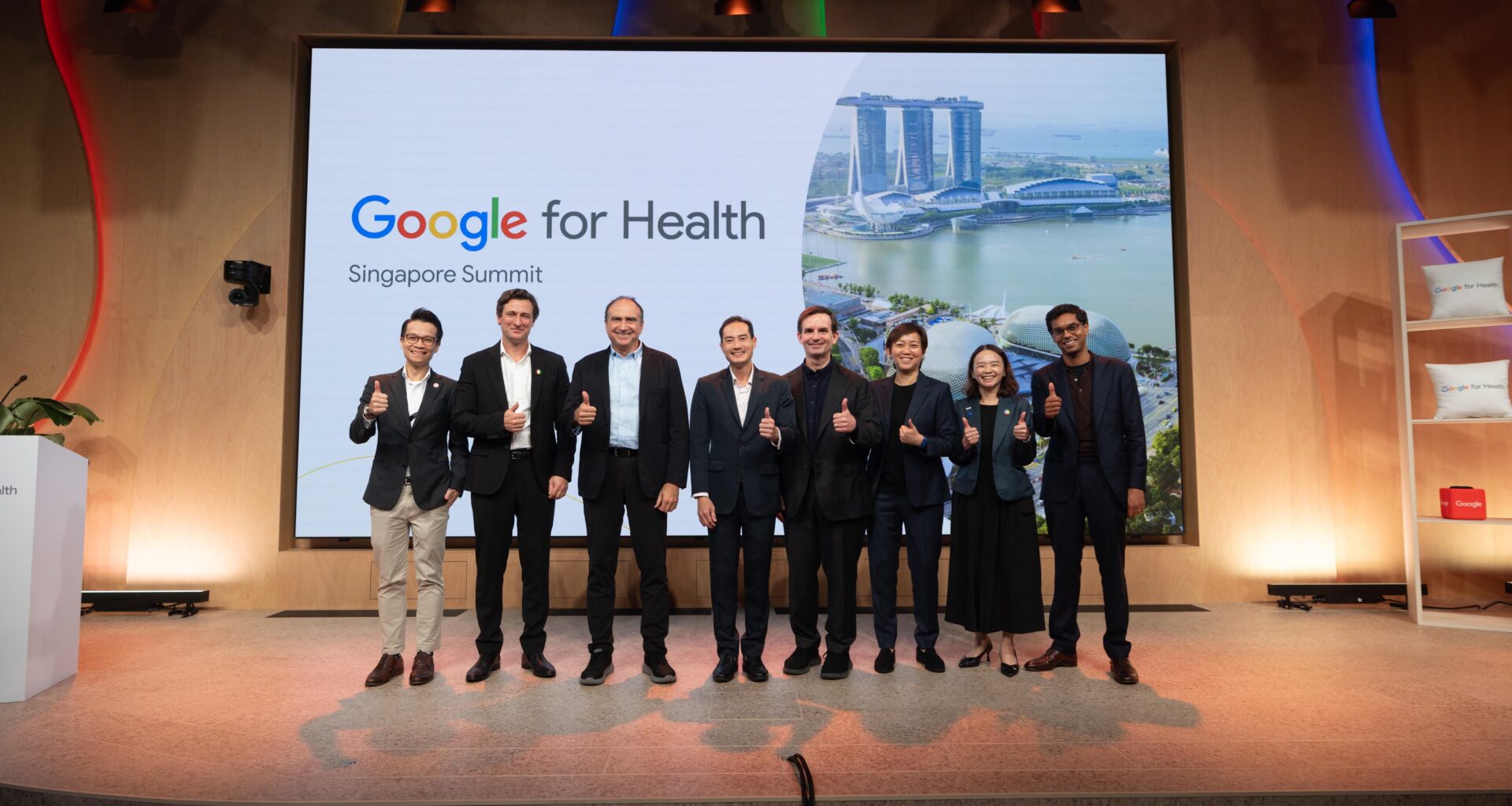
The announcements were made at the inaugural Google for Health Summit, attended by Mr Tan Kiat How, Senior Minister of State for the Ministry of Digital Development and Information and the Ministry of Health, as Guest of Honour. The initiatives build on the National AI Partnership established between Google and the Singapore Government in May.
The expanded collaboration brings together healthcare professionals, researchers and public agencies to address national health priorities while positioning Singapore as a regional launchpad for practical and scalable AI applications in healthcare.
One of the key developments is the establishment of a new Google Research hub in Singapore. The team, comprising research scientists and software engineers, will initially focus on improving the efficiency of foundational AI models, working alongside Google’s global research teams on technologies that are increasingly important to generative AI.
Google Research will also work with local academic institutions, including the National University of Singapore (NUS) and Nanyang Technological University (NTU), to nurture scientific talent and provide targeted research support.
Alongside its broader AI research efforts, Google will expand its existing health research initiatives in Singapore. This includes exploring the use of open models such as MedGemma in frontline healthcare settings, allowing local healthcare organisations to develop customised and secure AI solutions while maintaining control over their data.
Google is also contributing to scientific research through Google.org and Google DeepMind, which have joined the Philanthropy Asia Alliance’s (PAA) Health for Human Potential Coalition with a US$7 million funding contribution.
As part of this commitment, US$1 million from PAA will support PathGen, an AI enabled public health intelligence platform developed through the Asia Pathogen Genomics Initiative. The platform is designed to help countries detect, understand and respond to communicable disease threats more quickly and securely.
The funding will support PathGen’s research into genomic embeddings, which are compact AI representations of genomic data. The technology aims to enable genomic information to be used for public health intelligence while helping countries retain control over their underlying data.
Google DeepMind is also working with the National University Health System (NUHS) to begin trusted tester evaluations under its global AI co-clinician research initiative. The project explores how AI could support clinicians in their work and, over time, enable new models of care under medical supervision.
The collaboration will assess an AI co-clinician tool designed to assist doctors with clinical queries by synthesising information from existing medical guidelines and scientific literature. Clinicians will independently evaluate its responses against established clinical criteria to assess accuracy, safety and usefulness in routine outpatient practice.
The initiative is intended to explore AI as a decision support tool for healthcare professionals rather than a replacement for clinical judgement.
To help healthcare workers develop practical AI skills, Google is also expanding its Google Career Certificates portfolio with the new Google AI for Healthcare Professionals Certificate. The online programme will teach healthcare professionals how to use AI for administrative tasks and continuous learning.
Google plans to roll out the certificate through its existing scholarship partners while exploring additional collaborations with local healthcare organisations.
Another major initiative involves Google Cloud and NHG Health, which are working together on a Population Health Digital Transformation Programme aimed at strengthening preventive healthcare through predictive AI.
The programme combines two main components. The first is a predictive model that uses NHG Health’s de identified population health database alongside Google’s geospatial tools and solutions. These tools aggregate non personally identifiable spatial and temporal information, including climate, environmental, search and behavioural signals, to forecast health risks such as chronic diseases and frailty among specific population groups.
The second component is an AI enabled Health Coach integrated into NHG HealthBot and powered by Google’s Gemini Enterprise for Customer Experience platform. The coach is designed to provide residents with personalised lifestyle advice and preventive health guidance based on relevant contextual insights.
Anonymised interactions with the Health Coach will help refine the predictive models over time. The initial focus will be on encouraging health screening participation and preventing frailty, with the longer-term goal of potentially integrating the initiative with national health platforms.
The latest announcements build on Google’s existing efforts to apply technology to social and public health challenges in Singapore.
Previous initiatives include the development of Gemma Running Agent with SG Enable to support blind and low vision runners, a precision nutrition programme with local healthtech startup AMILI, and the expansion of the Debug facility in Singapore to support the National Environment Agency’s Project Wolbachia, which aims to combat dengue.


