






You start noticing it at night. The headlights of oncoming cars do not just shine anymore; they splinter into sharp, starry bursts that make you grip the steering wheel a little tighter. You wipe your glasses with the hem of your shirt, thinking it is just a smudge of thumb grease, but the smear remains. It is not on the glass. It is inside your own eye.
We tend to brush off this slow decay as just another inevitable insult of getting older. But the clouding of your natural lens is a mechanical failure, one that eventually demands a physical intervention. If you are starting to dread reading the fine print on a medicine bottle and are looking into options like Singapore cataract surgery, you have to navigate a maze of medical choices. The process is routine for the surgeon, but it is deeply personal and often overwhelming for you.
The Danger Of Waiting Too Long
In the past, your local doctor might have told you to wait until the cataract was completely “ripe” before doing anything about it. This is a terribly outdated and costly mistake. The older a cataract gets, the denser and harder the protein inside your eye becomes.
Modern surgery uses ultrasound to break up the clouded lens before vacuuming it out of the capsule. If you wait until the lens is as hard as a pebble, the surgeon has to use significantly more ultrasound energy to smash it apart. This excess energy traumatises the delicate tissue lining the inside of your cornea, severely prolonging your recovery and increasing the risk of permanent swelling. Do not wait for functional blindness to set in before you act.
Choosing Your Artificial Lens
Once the clouded lens is gone, it must be replaced with an artificial plastic one. This is where you face a stark, non-obvious trade-off. Most clinic brochures will push multifocal lenses as the ultimate upgrade, promising you will never need reading glasses again.
The reality is far more compromised. Multifocal lenses split the light entering your eye, sending a portion of it to focus on distant objects and a portion to nearby text. Because the available light is divided, your overall contrast drops. If you drive frequently at night or enjoy reading in dim light, a multifocal lens will often introduce frustrating halos around streetlamps and a constant, mild shadowing across your vision.
The Case For Monofocal Simplicity
Sometimes the older, simpler technology serves the human animal better. A standard monofocal lens focuses light perfectly at a single distance, usually far away. It gives you incredibly sharp, high-contrast vision for driving, watching a film, or walking the dog across a park.
The trade-off is that you will absolutely need a cheap pair of reading glasses to decipher a restaurant menu or read a text message. You have to decide what matters more to your daily rhythm: flawless distance vision with a pocket full of reading glasses, or a biological compromise across all distances that eliminates spectacles entirely.
The Reality Of The Operating Table
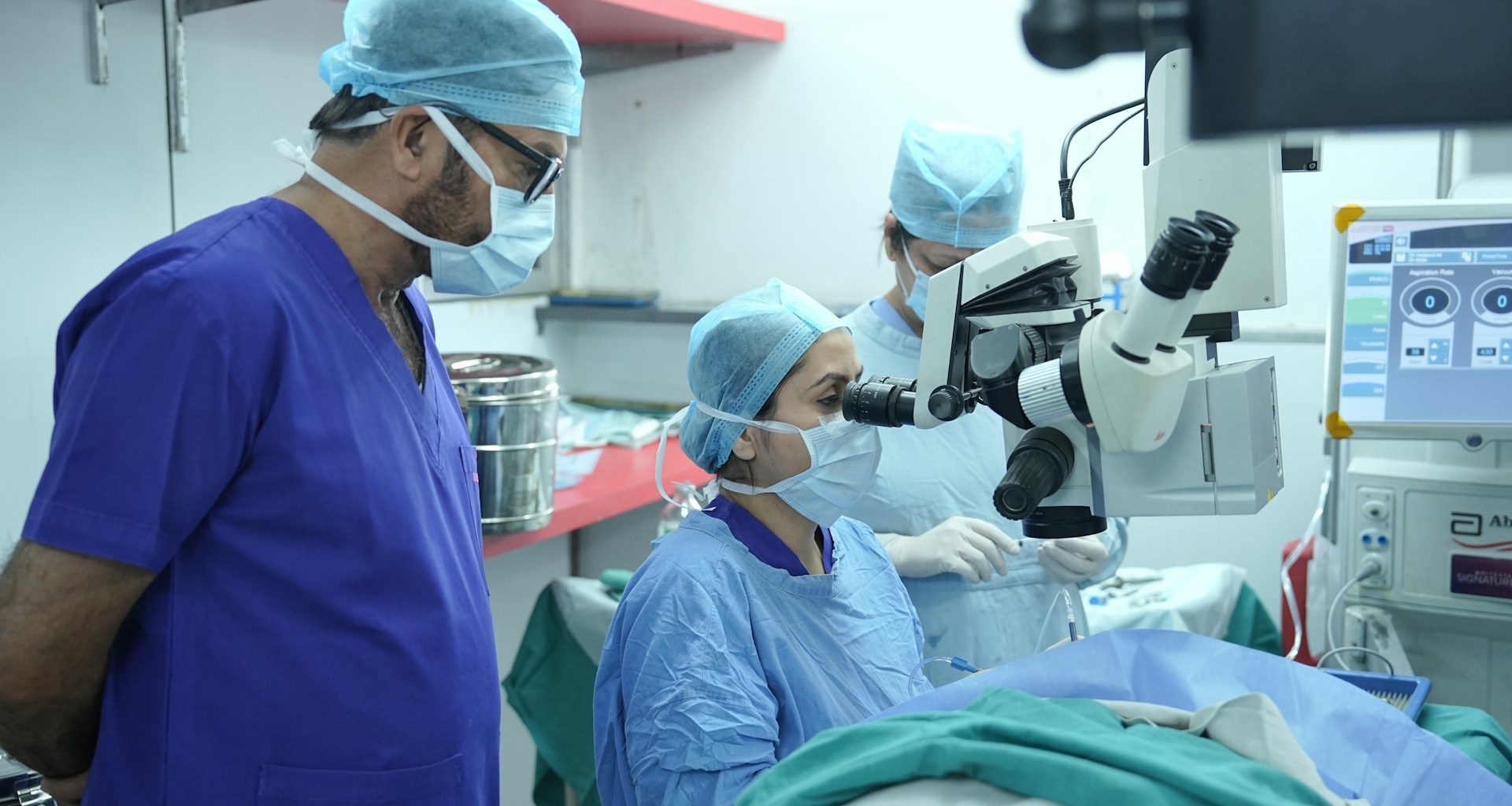
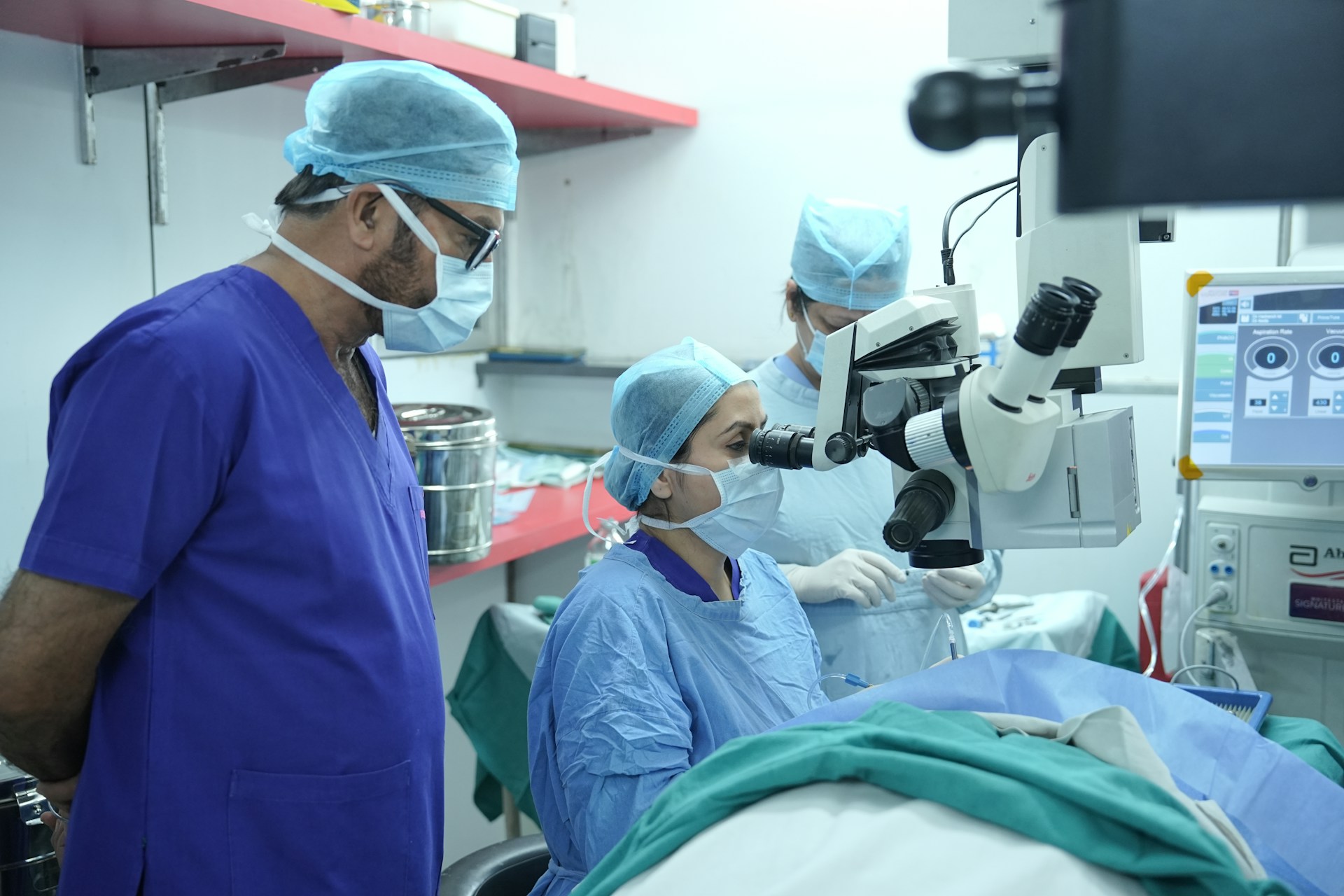
We all harbour a primal dread of sharp objects near our eyes, but the actual procedure is strangely anti-climactic. You do not go to sleep, and it does not hurt. You lie on your back under a bright, sterile drape. You are given drops that completely numb the surface of the eye, followed by a mild intravenous sedative that makes you feel pleasantly indifferent to the clinical activity moving above you.
- You will see a kaleidoscope of changing colours, usually pinks and bright blues, as the microscope light shifts.
- You will feel cold water rushing over the surface of your eye to keep it hydrated.
- You will hear a faint buzzing sound when the ultrasound probe breaks up the old lens.
The Hours After You Leave
They tape a clear plastic shield over your eye, and you walk out into the daylight feeling slightly lopsided. The first twenty-four hours are not about pain, but about a strange, scratchy sensation, as if a single stubborn eyelash is trapped under your lid.
You must resist the primal urge to rub it. The eye is currently healing itself, knitting microscopic incisions together without a single stitch. You rest, you put in the prescribed antibiotic drops with shaking hands, and you try to sleep flat on your back to avoid pressing your face into the pillow.
Waking Up To A Sharp World
The true shock arrives the next morning when you peel the plastic shield off in the bathroom mirror. The world does not just look clearer; it looks aggressively bright. A cataract does not just blur your vision; it turns everything a dull, muddy yellow over the course of a decade. When the artificial lens is exposed to the world, the yellow filter is gone. Whites are suddenly blindingly stark. Blues are shocking in their depth.
We spend so much of our later years accepting the slow decay of our physical selves, quietly adjusting to the blur. But you do not have to live in a fading, yellowed photograph. The decision to let a surgeon alter your eye is never taken lightly, but it is one of the few moments where modern medicine hands you back a piece of your youth, sharp and brilliantly coloured, ready to be looked at properly.