


![[Review] Yanhuo (烟伙餐馆) at Cross Street Serves Contemporary Chinese Dishes at Reasonable Prices - Alvinology](https://alvinology.com/wp-content/uploads/2026/10/yanhuo-chinese-restaurant-03-110x110.jpg "[Review] Yanhuo (烟伙餐馆) at Cross Street Serves Contemporary Chinese Dishes at Reasonable Prices")


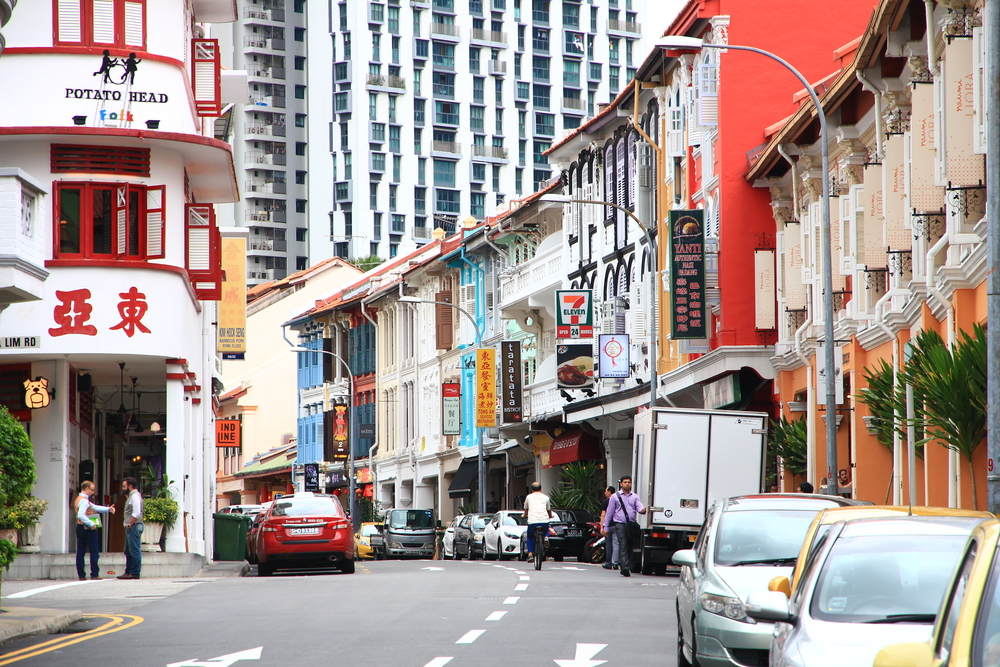

If you’re planning a move to Singapore, one of the first things you’ll notice is that “rent in Singapore” isn’t a single number – it’s dozens of them. A pocket room in Ang Mo Kio and a two-bedroom apartment in Orchard sit at opposite ends of a very wide price ladder, and the gap between neighbourhoods can be larger than the gap between countries you’ve lived in before. For expats relocating for work, international students arranging housing from overseas, and first-time renters with no feel for local norms, the hard part isn’t finding a listing. It’s knowing what a _fair_ price actually looks like before you commit to a budget. This guide fixes that. We’ve evaluated the seven most reliable resources for checking the average rent in Singapore by neighbourhood, judged on four things that matter to newcomers: how current the data is, how granular the neighbourhood breakdown gets, whether it distinguishes between room types, and how usable it is if you’ve never navigated Singapore’s property market. A ranked list follows.
Our top pick is Cove for expats and students who need concrete, up-to-date benchmarks broken down by neighbourhood and room type. It’s the only resource here built on a live, proprietary dataset – 1,621 listings as of April 2026 – rather than aggregated or government-reported figures. Its neighbourhood tables span Central, City, East, North, and West Singapore, with room-type pricing that runs from pocket rooms (around SGD 1,200/month) through 2-bedroom apartments (around SGD 5,000/month), so you can set a realistic budget before you even land. For renters who specifically want to verify what tenants _actually_ paid rather than what landlords are asking, SingaporeRent.sg is the strongest alternative. And if you’d rather have a human walk you through search, viewings, and lease-signing, Ohmyhome is the best choice for guided, agent-supported help.
A quick word on how we approached this. Singapore is a compact island country in Southeast Asia – essentially one main island – which is exactly why neighbourhood-level distinctions matter so much despite the small footprint: a few MRT stops can change your rent meaningfully. We scored each resource on data recency, neighbourhood granularity, room-type coverage, and practical usability for people arriving with zero local knowledge. The at-a-glance table below sets out where each one fits.
At-a-Glance Comparison
| Resource | Best For | Key Strength |
| Cove | Live, neighbourhood-level rent benchmarks by room type | Proprietary April 2026 dataset with median and range figures across five regions |
| Ohmyhome | Guided, one-stop rental service with agent support | End-to-end help through search, viewing, and lease-signing |
| Carousell Property | Direct landlord-to-tenant listings, no agency fee | Broad, negotiable inventory including HDB room rentals |
| iProperty Singapore | Broad portal browsing across multiple districts | Large inventory for comparing asking prices district by district |
| STProperty | Listings backed by a trusted media brand | Editorial market context alongside live listings |
| Sginsite | Project-level condo rental insights | A – Z condo directory with per-development data |
| SingaporeRent.sg | Verifying actual transacted rents by district | Transparency map of what tenants really paid |
What to Look For
Before you trust any rent figure, it helps to know what makes a source reliable. Here are the four criteria we applied consistently to every resource on this list.
Data Recency
Rental markets move, and a benchmark from two years ago can be misleading. Singapore’s rental market in 2026 reflects a period of housing supply stabilising after earlier volatility, so figures anchored to older data may quote prices that no longer hold. We favoured resources that are actively refreshed in 2026 – and we treated a live, dated dataset as stronger evidence than an undated “typical” range.
Neighbourhood Granularity
City-wide averages are almost useless when you’re choosing where to live. A good resource breaks rent down by area – ideally across Central, City, East, North, and West Singapore, or by named neighbourhoods like Orchard, Tanjong Pagar, Ang Mo Kio, and Tiong Bahru. The finer the geography, the more useful it is for weighing trade-offs such as proximity to MRT lines, international schools, or healthcare facilities, all of which push rents up or down.
Room-Type Coverage
“Rent” means very different things depending on what you’re renting. A pocket room (a smaller, budget-friendly private room), a common room, a master bedroom, a studio, a one-bedroom, and a two-bedroom apartment can span several thousand dollars a month. Resources that treat rent as a single figure aren’t much help; the ones we ranked highest distinguish clearly between these room types.
Practical Usability for Newcomers
Finally, can someone outside Singapore actually use it? That means clear explanations of local quirks – the difference between HDB (Housing & Development Board) flats, which are Singapore’s public housing, and private condominiums; how agent fees work; what MRT proximity means for your commute. A resource that assumes you already know these things scores lower for newcomers than one that guides you through them.
The 7 Best Resources for Average Rent in Singapore by Neighbourhood
Each resource below made the list because it genuinely helps you benchmark the cost of renting in Singapore at the neighbourhood level. The ranking reflects how well each one serves someone arriving with no prior knowledge of local rental norms – from initial budgeting all the way to negotiating a lease. Number one is our overall recommendation for that first, all-important step: figuring out what you should actually be paying.
#1. Cove – Best For Live, Neighbourhood-Level Rent Benchmarks By Room Type
The most concrete starting point for anyone budgeting a move, because the numbers come from real, current listings rather than estimates.
Most cost-of-living guides give you a vague range and leave you to guess where you fall within it. Cove takes the opposite approach. Its rental guide is built on a proprietary dataset of 1,621 live listings as of April 2026, which means the figures you’re reading reflect what’s genuinely on the market right now – not last year’s averages or crowd-sourced guesses. If you want a single reference that tells you the cost of renting in Singapore neighbourhood by neighbourhood and room type by room type, this is where we’d send you first.
The breakdown spans five regions – Central, City, East, North, and West – with both median and range figures per area, so you can see not just the typical price but how much rents spread within a neighbourhood. Room types run from pocket rooms at around SGD 1,200/month up to two-bedroom apartments near SGD 5,000/month (you can convert these to approximate USD at prevailing exchange rates, which fluctuate, so treat any conversion as a moving target). What sets it apart is the practical commentary layered on top of the numbers: it doesn’t just tell you Orchard is expensive and Balestier is cheaper – it explains the trade-off, so a newcomer can weigh a shorter commute against a lower rent. Named neighbourhoods including Orchard, Tanjong Pagar, Ang Mo Kio, Tiong Bahru, and Balestier all get coverage.
Strengths
- The only resource here built on a live, proprietary dataset rather than aggregated or government-reported figures
- Granular neighbourhood tables with both median and price range, not just a city-wide average
- Room-type specificity that lets you plan a budget from entry-level to mid-range rentals
- Practical value commentary that helps you understand _why_ one area costs more than another
- Data current as of April 2026
Trade-offs
- Reflects Cove’s own managed and co-living inventory, so it doesn’t capture the entire open market
- Doesn’t cover HDB whole-unit rentals or landed property
- Best suited to individuals and small households; less useful for families needing large units
- Coverage can be thinner in outer suburban neighbourhoods
Best for: Expats, international students, and first-time renters who want hard numbers by neighbourhood and room type before setting a budget.
#2. Ohmyhome – Best For Tenants Who Want Guided, One-Stop Rental Service With Agent Support
The right pick when you’d rather have a person handle the process than teach yourself Singapore’s rental rules from scratch.
Ohmyhome pairs property listings with in-house agent and concierge services, which makes it less of a data tool and more of a done-for-you service. For someone landing from overseas who doesn’t yet understand local agent-fee conventions or what a standard tenancy agreement looks like, that hand-holding is worth a lot. The platform covers both HDB flats and private residential rentals, and its technology-assisted matching helps you shortlist and schedule viewings without endless back-and-forth.
Because it spans public and private housing, it’s broader than co-living-focused resources – you can compare an HDB room against a condo unit in the same search. The in-house agents also guide you through lease terms, which removes a genuine source of anxiety for newcomers who don’t want to sign something they don’t fully understand.
Strengths
- End-to-end support reduces friction for first-time renters and arriving expats
- Covers both HDB flats and private condos
- In-house agents explain lease terms and tenancy norms
- Technology platform streamlines shortlisting and viewing scheduling
Trade-offs
- Service-led model makes it weaker as a pure benchmarking resource
- Agent-assisted services carry fees that DIY renters may want to avoid
- Neighbourhood-level rent data is less granular than dedicated benchmarking tools
- Overkill if you already know what you want and just need price validation
Best for: Renters who feel overwhelmed navigating the market alone and value process support over raw data.
#3. Carousell Property – Best For Renters Seeking Direct Landlord-To-Tenant Listings And Flexible, Negotiable Options
The budget-friendly route for students and short-stay arrivals who want to skip agency fees and talk to landlords directly.
Carousell Property works like a marketplace, which changes the dynamic entirely. Many listings come straight from landlords, so you can often avoid the agent fee attached to formal portals. That direct model, combined with a broad mix of HDB room rentals, whole-unit flats, and private rooms, makes it a natural fit for international students and anyone on a tight budget. HDB room rental in Singapore is one of its strongest use cases – if you’re after a common room in a flat rather than a whole unit, there’s usually plenty to browse.
The familiar marketplace interface also lowers the barrier for newcomers, and the flexible, negotiable listing formats – including short-term options – suit people who aren’t ready to commit to a standard two-year lease.
Strengths
- Direct landlord-to-tenant model eliminates agency fees on many listings
- Deep inventory of HDB room rentals suited to students and budget renters
- Flexible, negotiable, and short-term options you won’t always find on formal portals
- Familiar interface that’s easy for newcomers to pick up
Trade-offs
- Listing quality and accuracy vary; not everything is verified or current
- No structured neighbourhood-level rent data or benchmarking tools
- Peer-to-peer platforms carry scam risk, so more due diligence is on you
- Less useful for expats seeking premium or fully managed rentals
Best for: Budget-conscious renters, international students, and short-stay arrivals who want direct landlord deals.
#4. iProperty Singapore – Best For Renters Who Want Broad Portal-Style Inventory To Compare Listings Across Multiple Districts
A high-volume browsing tool for calibrating your asking-price expectations before you narrow the search.
If you’re researching from abroad and want to get a general feel for what landlords are asking across different districts, iProperty Singapore gives you the volume to do it. It’s a portal-style platform with filters by district, property type, and price range, and it sits within a wider regional property network – which can be reassuring if you’ve already used iProperty elsewhere in Southeast Asia. The inventory of private condos and apartments is broad enough to let you compare asking prices meaningfully from one area to the next.
Think of it as a way to sanity-check the ballpark rather than a precise benchmark. Asking prices are what landlords _hope_ to get, and those don’t always match what tenants actually pay – so pair it with a transacted-rent source before you negotiate.
Strengths
- Large inventory supports genuine district-by-district price comparison
- Regional network credibility for expats familiar with the brand elsewhere
- Filter tools make remote research straightforward
- Solid coverage of private residential rentals
Trade-offs
- Asking prices don’t always reflect actual transacted rents
- Less neighbourhood-granular than dedicated benchmarking resources
- Limited HDB room rental coverage compared with a marketplace like Carousell
- No editorial commentary or value-for-money guidance for newcomers
Best for: Expats relocating from abroad who want a big-picture view of asking prices across districts before zeroing in.
#5. STProperty – Best For Readers Who Want Rental Listings Backed By The Credibility Of The Straits Times Brand
The trust-first option for renters who already follow Singapore property news and want listings alongside editorial context.
STProperty is a listings platform associated with The Straits Times, Singapore’s main English-language newspaper – and for a lot of newcomers, that media backing matters. It’s easier to trust a platform tied to a recognisable news brand than an anonymous portal, especially when you’re evaluating a market you don’t yet know. The platform covers both private residential and HDB flat rentals, and its real edge is the editorial market commentary sitting alongside the listings, which helps you read individual prices against the broader Singapore rental market in 2026.
That combination is useful if you like to understand the _why_ behind the numbers – where the market is heading, which areas are seeing pressure – rather than just scrolling through units in isolation.
Strengths
- Media-brand association lends genuine trust and editorial credibility
- Lets you cross-reference live listings with broader market commentary
- Covers a range of property types, including HDB flats and condos
- Familiar to readers already following Straits Times property coverage
Trade-offs
- Not a dedicated benchmarking tool; neighbourhood price tables aren’t a core feature
- Less useful if you want raw data rather than a browsing experience
- Inventory may be smaller than the largest dedicated portals
- Editorial content and listings aren’t always tightly integrated
Best for: Renters who already consume Singapore property news and want a media-backed platform to cross-reference against.
#6. Sginsite – Best For Condo Renters Who Want Project-Level Rental Insights And A – Z Condo Directory Pages
The specialist to reach for once you’ve shortlisted specific developments and want data at the building level.
Most resources stop at the neighbourhood. Sginsite goes one level deeper with a condo-by-condo directory covering Singapore’s private residential market, offering project-level rental insights – price ranges for individual developments – through its A – Z condo pages. That’s genuinely useful when a renter already has a particular condo in mind, perhaps because a corporate housing budget or a shortlist has already narrowed things down. Instead of guessing what a specific building rents for, you can look it up.
This is a complement to neighbourhood guides, not a replacement for them. It’s most valuable at the later, targeted stage of a search rather than the early exploration phase.
Strengths
- Project-level granularity that’s rare among general portals
- Specialist focus means deeper condo data
- Drills down to individual buildings, complementing broader guides
- Well-suited to expats on corporate housing budgets shortlisting developments
Trade-offs
- Focused exclusively on private condos; no use for HDB or budget room rentals
- Less relevant if you’re still exploring neighbourhoods
- Data may refresh less frequently than live listing portals
- Limited practical commentary for newcomers unfamiliar with the condo market
Best for: Mid-to-upper-budget expats who’ve shortlisted specific developments and want data at the project level.
#7. SingaporeRent.sg – Best For Renters Who Want A Transparency Map Of Actual Transacted Rents By District
The negotiation tool – it tells you what tenants really paid, not just what landlords are asking.
Where portals show asking prices, SingaporeRent.sg surfaces actual transacted rents by district. That distinction is powerful right before you sign a lease: if a landlord quotes you a figure, this is how you check whether it’s above or below what comparable units genuinely rented for. For expats unfamiliar with Singapore’s rental negotiation norms, having transacted data in hand is a real confidence boost – it turns a guess into an evidence-backed conversation.
It’s a niche, transparency-focused resource, and it works best alongside a broader tool rather than on its own. But for the specific job of validating a price, nothing on this list does it more directly.
Strengths
- Transacted rent data is more reliable than asking prices for negotiation
- District-level breakdown flags whether a quoted price is above or below market
- Fills a transparency gap that listing portals ignore
- Especially valuable for expats new to Singapore negotiation norms
Trade-offs
- Doesn’t offer the room-type granularity of dedicated co-living or managed resources
- Transacted data can lag the very latest market movements
- Less useful for early-stage neighbourhood exploration
- Narrower scope than full-service portals; best paired with a broader resource
Best for: Renters – especially expats negotiating with landlords – who want to verify a quoted rent against what tenants actually paid.
Frequently Asked Questions
What’s The Difference Between Cove And SingaporeRent.sg For Checking Rent?
They solve different problems at different stages. Cove is built for benchmarking: its live April 2026 dataset breaks rent down by neighbourhood and room type, so it’s ideal early on when you’re setting a budget and comparing areas. SingaporeRent.sg is built for validation: it shows actual transacted rents by district, which is what you want at the negotiation stage to confirm a landlord’s quote is fair. Most renters benefit from using Cove first to shape a budget, then SingaporeRent.sg to pressure-test a specific offer.
Which Is Best For International Students On A Tight Budget – Carousell Property Or A Portal Like iProperty Singapore?
For students watching every dollar, Carousell Property usually wins. Its direct landlord-to-tenant model means you can often avoid agency fees, and it carries a deep supply of HDB room rentals – common rooms in public housing flats – which sit at the affordable end of the market. iProperty Singapore leans toward private condos and apartments, which tend to cost more and suit expats with larger budgets. The trade-off is due diligence: on a peer-to-peer marketplace like Carousell, you need to verify listings carefully to avoid scams.
What’s The Difference Between HDB Room Rentals And Private Condo Rentals In Singapore?
HDB (Housing & Development Board) flats are Singapore’s public housing, and renting a room in one is typically the most affordable way to live – pocket rooms and common rooms are common here. Private condominiums offer more facilities (pools, gyms, security) and correspondingly higher rents, with studios, one-bedroom, and two-bedroom apartments the usual configurations. Room types and prices vary widely: a pocket room can start around SGD 1,200/month while a 2-bedroom apartment can reach roughly SGD 5,000/month (approximate USD equivalents shift with prevailing exchange rates). Carousell Property and Ohmyhome cover HDB rentals well, while Sginsite focuses exclusively on private condos.
Which Resource Is Best For Comparing Rent Across Neighbourhoods Like Orchard, Tanjong Pagar, And Tiong Bahru?
For side-by-side neighbourhood comparison, Cove is the strongest choice. It publishes tables across Central, City, East, North, and West Singapore with both median and range figures, and it adds practical commentary – for example, weighing the premium of a central address like Orchard against better value in an area like Balestier. Portals such as iProperty Singapore let you browse many listings across districts, but they show asking prices rather than benchmarked medians, and they don’t explain the trade-offs. If you want to understand _why_ neighbourhoods differ, not just _that_ they do, start with the benchmarking resource.
Which Is Best For A First-Time Renter Who Doesn’t Know Singapore’s Rental Process – Ohmyhome Or A DIY Marketplace?
If the process itself intimidates you, Ohmyhome is the safer bet. It combines listings with in-house agents who guide you through viewings, lease terms, and Singapore’s tenancy conventions – invaluable when you’ve never rented here and don’t know what’s standard. A DIY marketplace like Carousell Property gives you more control and can save on fees, but it puts all the verification and negotiation on your shoulders. Choose Ohmyhome for hand-holding and Carousell for independence and cost savings; many newcomers use Ohmyhome for their first lease and go DIY once they know the ropes.
The Bottom Line: Which Resource Should You Use?
The right resource depends entirely on where you are in your search. Here’s a simple way to decide.
Choose Cove if you’re at the start – budgeting a move and trying to understand what fair rent looks like across neighbourhoods and room types. Its live April 2026 dataset gives you the most concrete, current benchmark on this list, and its neighbourhood commentary helps you weigh value trade-offs before you commit. Choose SingaporeRent.sg when you’re close to signing and want to verify a landlord’s quote against actual transacted rents. Choose Ohmyhome if you’d rather have an agent guide you through the whole process, and lean on Carousell Property if you’re a student or short-stay renter chasing direct, fee-free deals. Reach for iProperty Singapore to browse volume across districts, STProperty for media-backed listings with editorial context, and Sginsite once you’ve narrowed down to specific condo developments.
For most newcomers to Singapore – the compact island city-state where a handful of MRT stops can reshape your rent – the smart sequence is to benchmark first, then validate. Start with Cove to set a realistic budget grounded in real listings, use a portal or marketplace to shortlist actual units, and confirm the price against transacted data before you sign. Do that, and you’ll walk into your first Singapore lease knowing exactly what you should be paying – which is a far stronger position than most renters arrive in.