




The Asian Civilisations Museum (ACM) is bringing the art, history and cultural legacy of Dunhuang to Singapore with Sacred Caves: Dunhuang, Buddhism, and the Silk Road, an exhibition featuring original artworks and four life size reproductions of the famed Mogao Caves.
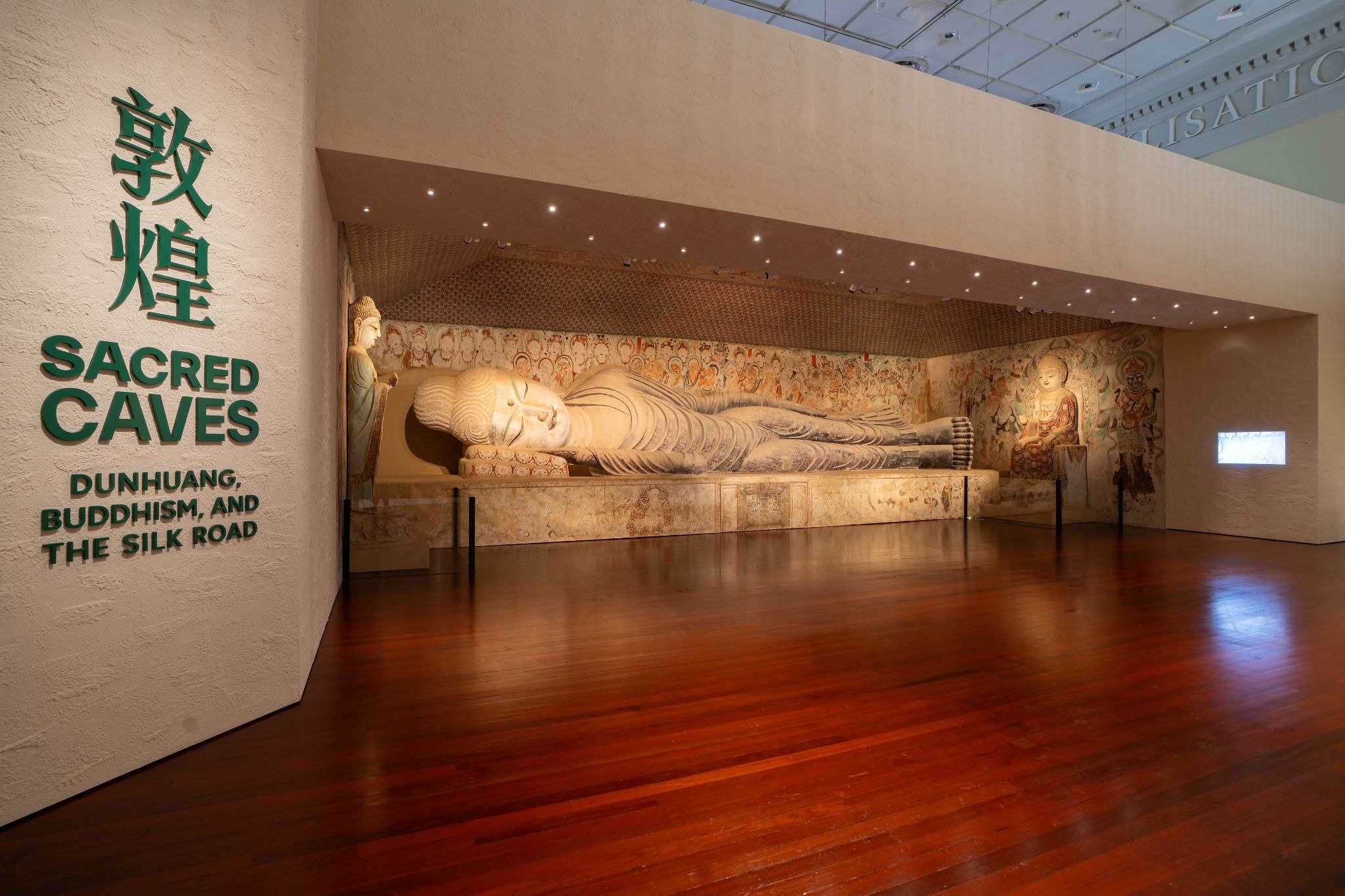
Presented in collaboration with the Dunhuang Academy, the exhibition runs from 25 September 2026 to 7 March 2027. It marks the first time that life size reproductions of the Mogao Caves have been presented in Southeast Asia.
Located in northwestern China, Dunhuang was an important crossroads along the ancient Silk Road, connecting China with Central Asia, India, the Middle East and Europe. Buddhism flourished in the region, leading to the creation of the Mogao Caves, a vast complex of Buddhist cave temples built between the 4th and 14th centuries.
At ACM, the exhibition spans the Level 2 Foyer and Special Exhibitions Gallery, bringing together paintings, sculptures, manuscripts, textiles and devotional objects from Dunhuang alongside the cave reproductions.
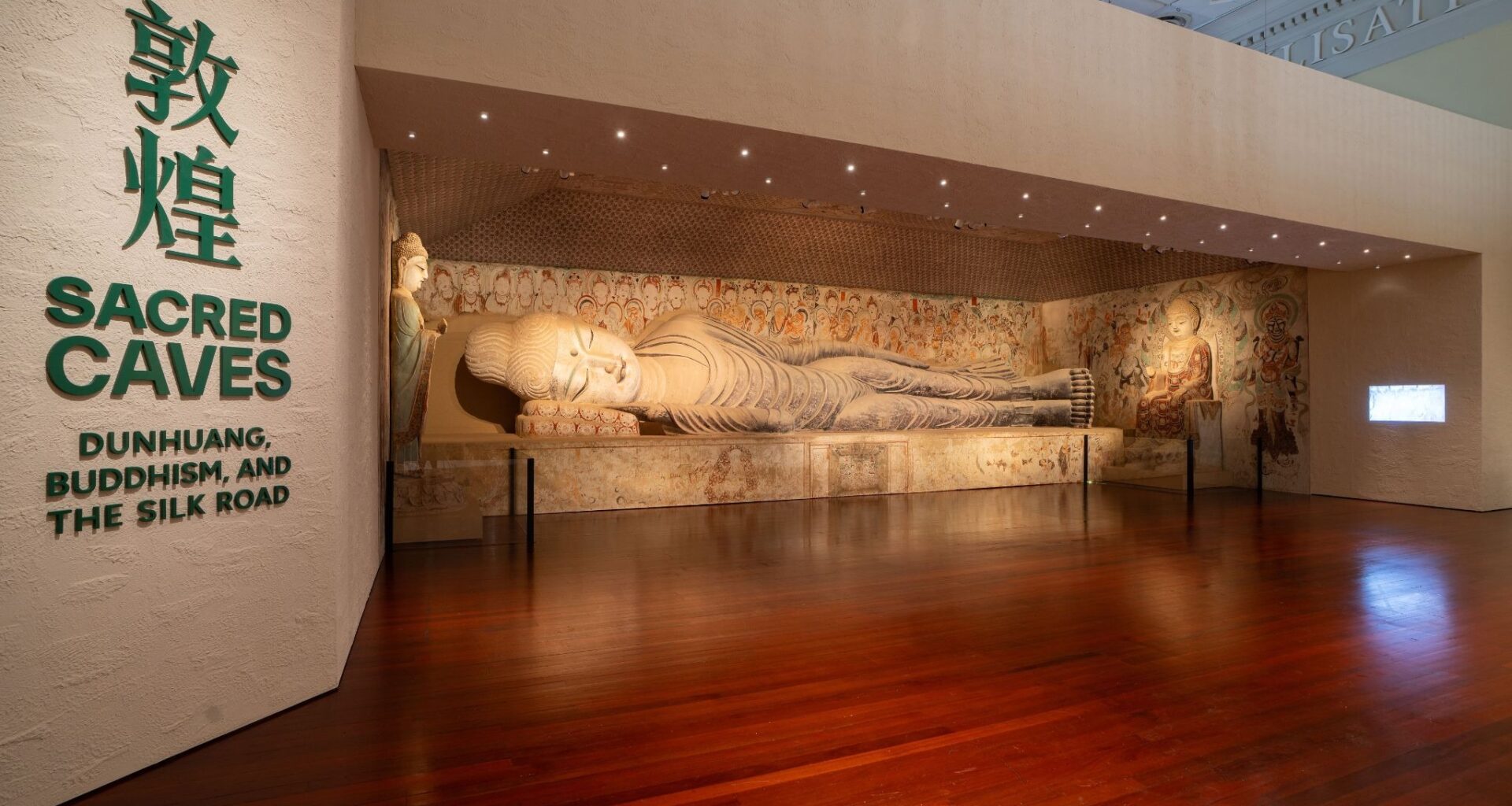
The Foyer introduces visitors to the Mogao Caves, including how the caves were constructed and decorated. It also features a life size reproduction of Cave 158, which contains the largest reclining Buddha at the Mogao Caves. The sculpture depicts Shakyamuni, the historical Buddha, entering nirvana, surrounded by mourners from different regions. The scene also includes buddhas representing the past and future, bringing different periods of time together.
Three additional cave reproductions are located in the Special Exhibitions Gallery. Cave 249 combines Buddhist and Chinese mythological figures in a depiction of the cosmos. Cave 45 features a celebrated Tang dynasty sculptural group, while Cave 3 is known for the fluid brushwork of its paintings. Three of the four reproduced caves are currently restricted or completely closed to visitors at Dunhuang, making the reproductions an opportunity to experience their interiors in Singapore.
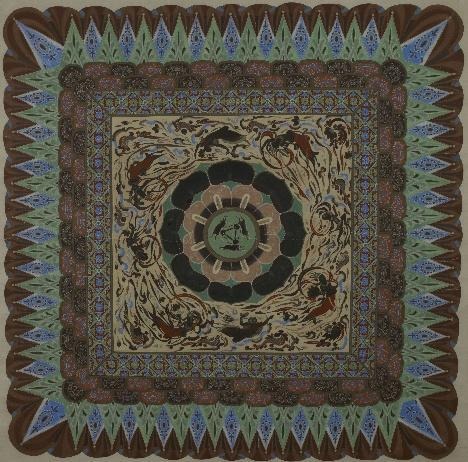
The gallery explores Dunhuang through three themes: City, Devotion and People. It begins with a linmo, or copy painting, based on the ceiling of Cave 407. The artwork features three hares sharing three ears within a circular composition. Similar designs have appeared across Eurasia, with different cultures assigning different meanings to the motif.
The City section looks at Dunhuang’s role as a strategic garrison town and Silk Road trading centre on the edge of the Gobi Desert. Merchants, envoys, pilgrims and other travellers passed through the city, bringing goods, beliefs and ideas with them. Objects on display include a Tang dynasty travel pass and a coin from Sassanid Iran, illustrating the movement of people and goods across long distances.
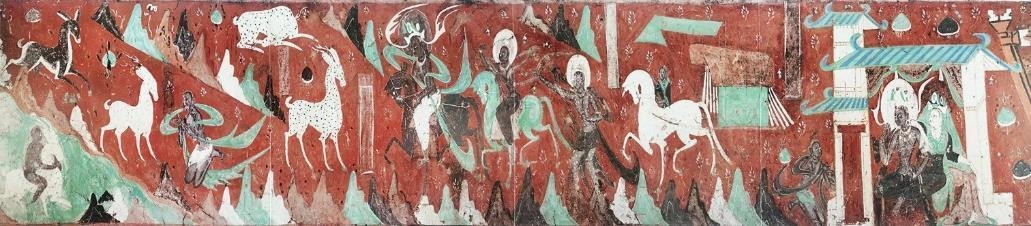
The Devotion section focuses on Buddhism and the religious practices that shaped the Mogao Caves. Patrons commissioned caves, paintings and sculptures as acts of devotion over the centuries. Among the artworks is the Jataka of the Nine-Coloured Deer from Cave 257, which depicts one of the Buddha’s past lives and explores themes including compassion, integrity and karmic consequence.
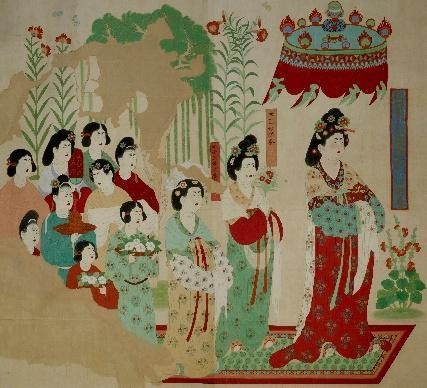
The People section offers a more personal view of the communities connected to Dunhuang. Donor portraits of rulers, monks and influential women appear alongside objects documenting daily life. Highlights include an early example of movable type, a divination diagram, artists’ tools and a fragmentary sculpture showing how Mogao sculptures were constructed. The fragment is being displayed outside Dunhuang for the first time.
The exhibition also examines the modern history of the Mogao Caves, including their study and conservation. Historical photographs taken by James and Lucy Lo in 1943 and 1944 are featured as part of an archive of more than 2,500 photographs. Contemporary conservation and digitisation projects further demonstrate the Dunhuang Academy’s ongoing work to document and preserve the site.
Visitors can also experience Dunhuang through sound and interactive activities. A soundscape created by Sulwyn Lok features three original compositions inspired by the musical cultures of Dunhuang and the Silk Road. The works incorporate instruments including the bansuri and yangqin, which travelled along Silk Road routes, alongside the dizi, ruan, cello, saron and bonang.
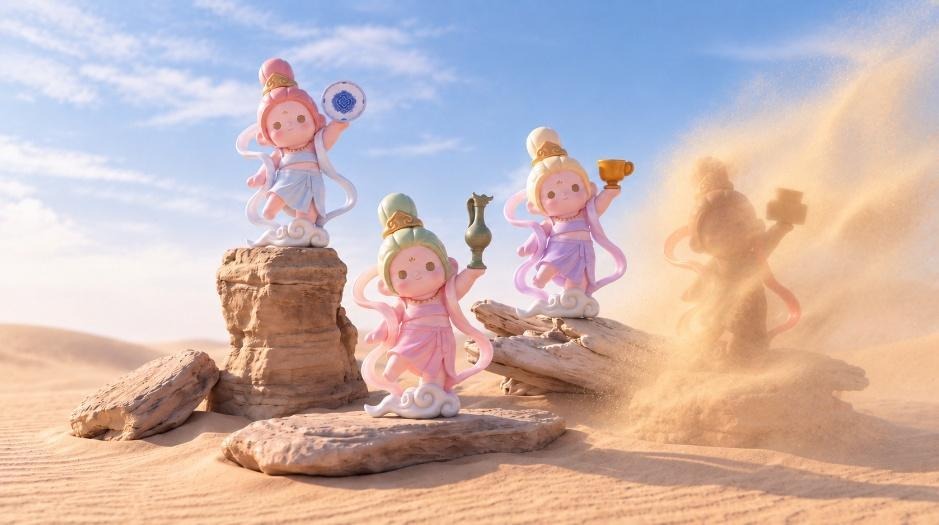
An interactive stamping trail extends beyond ACM to the Bank of China and Fullerton Hotel. Visitors who collect at least six stamps can redeem a blind box apsara figurine from 2 October 2026, with three designs featuring objects from ACM’s collection and a fourth secret design inspired by a familiar Singapore custom.
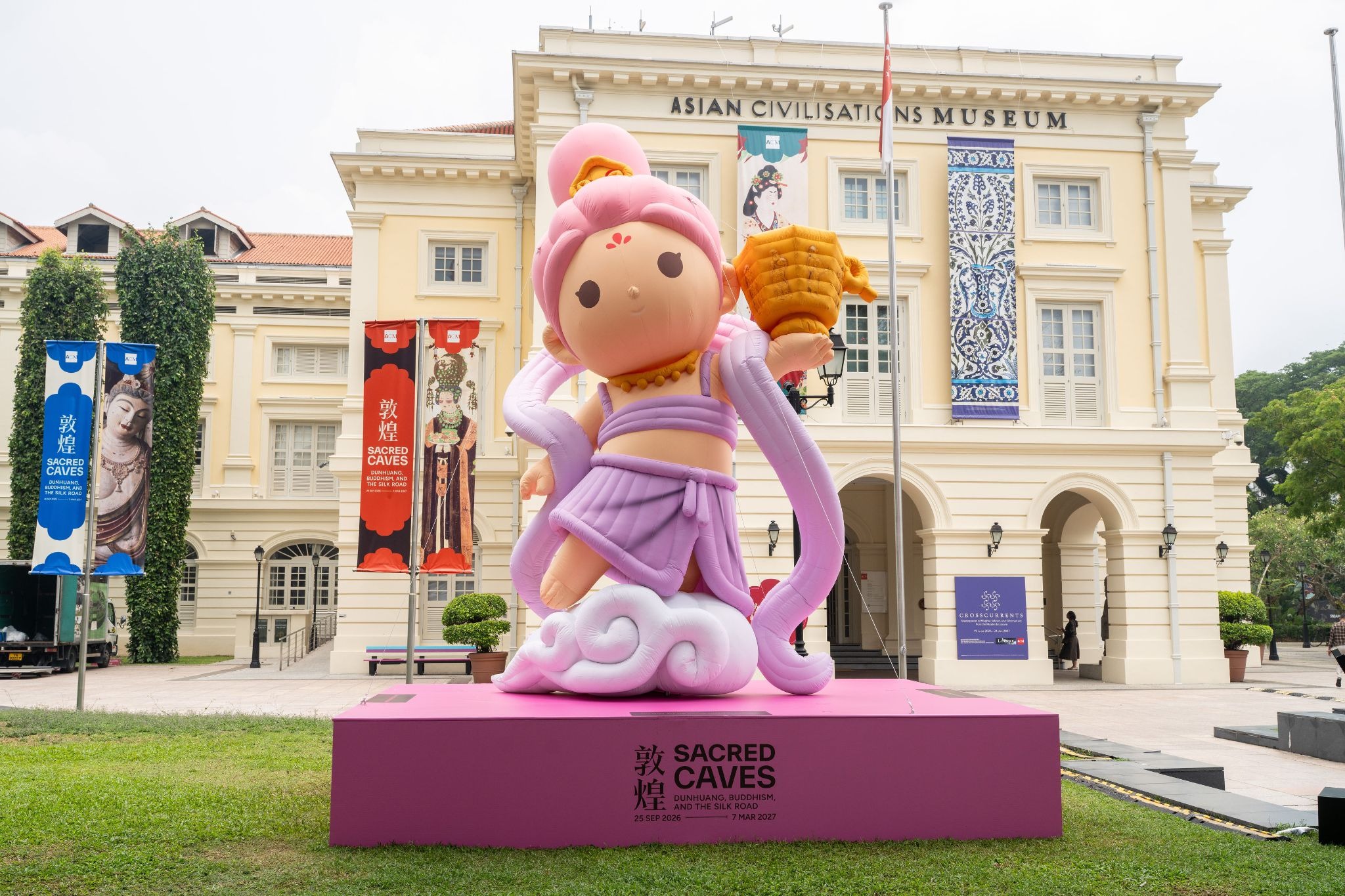
A digital trail also invites visitors to collect the colours of Dunhuang using RFID enabled paintbrushes. Starting at the Cave of Colours in the ACM lobby, the trail continues through the exhibition, where collected colours are used to create digital wallpaper and generate a portrait featuring costumes inspired by the Mogao Caves. The experience concludes outside the museum with a six-metre inflatable apsara photospot.
Sacred Caves: Dunhuang, Buddhism, and the Silk Road runs from 25 September 2026 to 7 March 2027 at the Asian Civilisations Museum. Ticketing fees apply. https://alvinology.com/2026/09/23/singapore-travellers-can-get-free-shinkansen-fares-to-kagoshima-with-klook/