





The creator economy rewards one thing above all else: consistency. Algorithms favor accounts that post reliably. Audiences follow creators who deliver predictable quality. Sponsorship deals go to creators who demonstrate sustained output.
Yet maintaining studio-level visual quality across daily or near-daily short-form posts remains the central operational challenge for independent creators. The gap between what audiences expect and what a solo creator can realistically produce—without a production team or professional equipment—defines the ceiling that most creators eventually hit.
The Consistency Trap in Short-Form Content
Short-form video platforms have created an unusual creative paradox. The content format is brief—fifteen to sixty seconds—but the production demands are relentless. A creator posting daily needs three hundred sixty-five pieces of polished content annually. Each piece must meet audience expectations for visual quality, creative originality, and emotional resonance. The margin for off-days is thin: a string of lower-quality posts can trigger algorithmic deprioritization that takes weeks to recover from.
Independent creators face this pressure without the support structures that media companies or larger creator teams enjoy. There is no dedicated editor to polish rough footage, no sound designer to craft atmosphere, no cinematographer to ensure consistent framing and lighting across shoots. Every element of production falls on the creator, and the cumulative time investment often forces difficult tradeoffs between posting frequency and content quality.
The result is a familiar pattern. Creators start strong with carefully produced content, build an audience that expects that quality level, then gradually struggle to maintain standards as the daily production grind accumulates. Quality dips. Engagement softens. Growth stalls. The creator either burns out trying to maintain unsustainable production effort or accepts lower quality and watches their competitive position erode.
Lightweight AI Generation as a Creative Equalizer
The emergence of capable AI video generation tools has introduced a practical alternative to this unsustainable cycle. Rather than requiring creators to personally execute every production element, these tools allow creators to focus on creative direction while the generation model handles visual execution, sound design, and scene composition.

MiniMax H3 Max on Pollo AI is particularly well-suited to the creator workflow because it mirrors how creators naturally think about content. A creator typically starts with a mood, a visual concept, or an emotional beat they want to hit—not a technical production specification. The model’s strength lies in interpreting these atmospheric and tonal cues accurately, translating prompts describing mood, energy level, and visual feeling into coherent video output with natural motion and consistent scene logic.
The generation speed aligns with creator rhythms as well. Producing a short clip in seconds means a creator can experiment with multiple visual approaches to the same concept without committing hours to each attempt. This rapid iteration cycle encourages creative exploration rather than conservative repetition—creators can try ambitious visual ideas knowing that a failed experiment costs seconds rather than an entire afternoon of shooting and editing.
MiniMax H3 Max on Pollo AI also handles audio natively, generating ambient sound, background music, and atmospheric effects synchronized with the visual output. For solo creators who typically spend significant time sourcing royalty-free music and manually syncing audio to cuts, this integrated approach eliminates one of the most time-consuming post-production steps in short-form content creation.
Zero-to-Published: A Creator’s Practical Workflow
Building a sustainable daily content practice around AI video generation requires workflow design, not just tool access.
Step One: Develop a Rolling Concept Bank
Dedicate fifteen minutes daily to capturing content ideas as they occur—visual concepts, trending audio cues, narrative fragments, aesthetic references. Store these in a simple document organized by content category (lifestyle, storytelling, educational, trending). This concept bank becomes your generation fuel, ensuring you never face a blank-page moment when it’s time to produce.
Step Two: Write Atmosphere-First Prompts
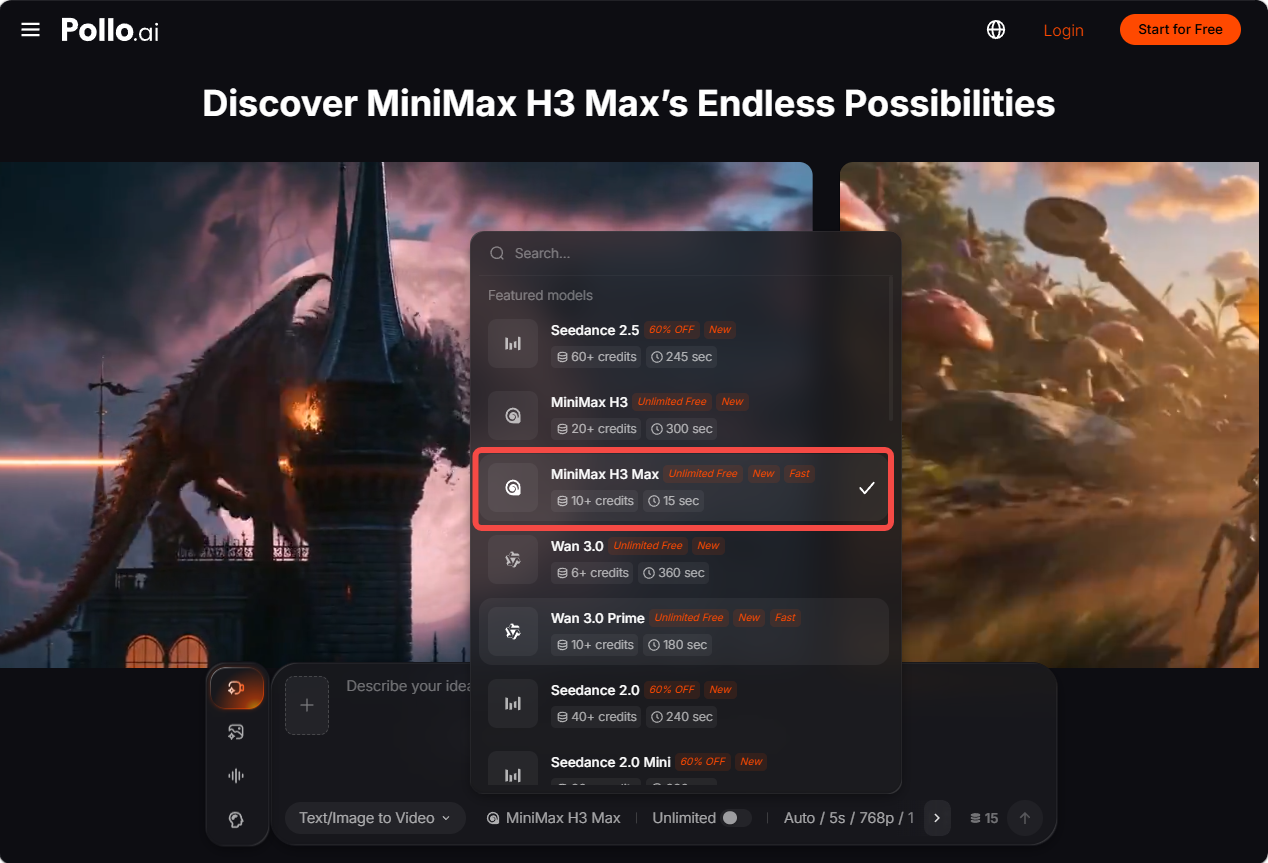
When translating a concept into a generation brief for MiniMax H3 Max on Pollo AI, lead with atmosphere rather than technical specifications. Describe the feeling you want the viewer to experience: the warmth of golden-hour light through a café window, the kinetic energy of a crowded street market, the stillness of an early morning landscape. The model interprets these emotional cues with surprising accuracy, often producing output that captures the intended mood more naturally than technically precise but emotionally flat descriptions would.
Layer specific creative details onto this atmospheric foundation: camera drift direction, subject positioning, color palette preferences. This approach produces content that feels intentional and emotionally resonant rather than technically generated.
Step Three: Generate, Select, and Refine
Produce three to four variations of each concept, reviewing them for emotional impact and visual quality rather than technical perfection. Select the variation that best captures your creative intent. Use the platform’s editing tools to make any targeted refinements—adjusting composition or cleaning minor visual inconsistencies.
The entire generate-review-refine cycle for a single piece of content typically takes ten to fifteen minutes, leaving the creator’s remaining time available for audience engagement, strategic planning, or simply living the life that fuels their creative perspective.
Step Four: Prepare Source Materials for Maximum Impact
Many creators work with personal photography as reference material for AI generation—travel snapshots, candid portraits, environmental shots captured on smartphones. These images carry authentic personal perspective but often lack the technical polish that produces the best generation results.
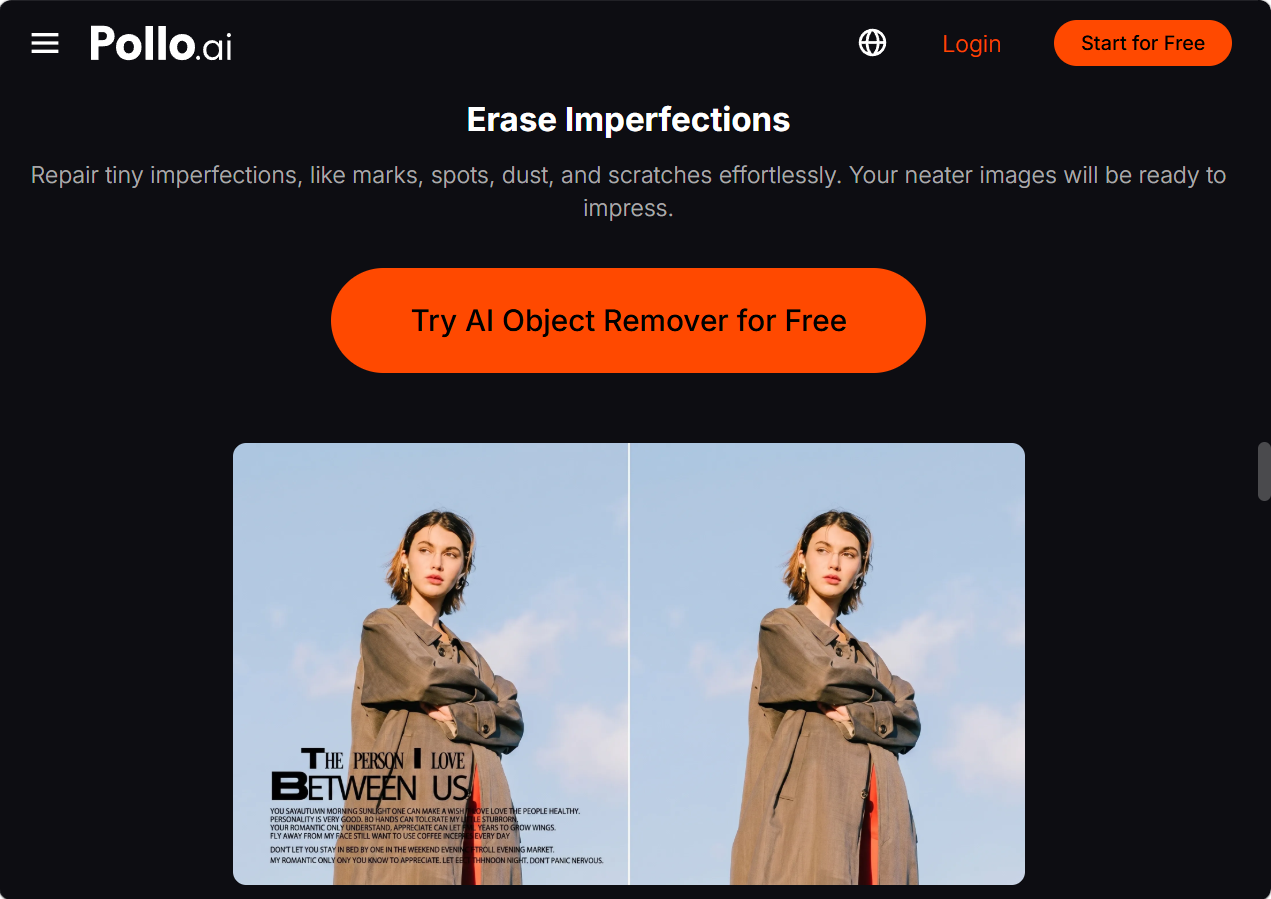
Pollo AI’s Magic Eraser serves as a practical preprocessing step in this workflow. Creators can clean up reference photos by removing photobombing strangers from travel shots, eliminating distracting signage from street photography, or stripping visual clutter from lifestyle images. A café scene with an awkward background patron becomes a clean, atmospheric reference. A beach sunset with litter in the foreground becomes a pristine environmental image. These cleaned references produce noticeably better video generation results, as the model works from compositions that already reflect the creator’s intended visual focus.
This preprocessing habit takes minutes per image but compounds in impact across a content calendar, ensuring every generated video starts from the strongest possible visual foundation.
Translating Creative Vision Into Consistent Output
The practical value of AI video generation for creators extends beyond individual clips to portfolio-wide consistency. When a creator’s visual identity depends on maintaining a specific aesthetic—warm tones, particular camera behaviors, consistent pacing—reproducing that identity manually across hundreds of posts requires extraordinary discipline and skill.
MiniMax H3 Max on Pollo AI supports this consistency through its responsiveness to detailed atmospheric direction. A creator who establishes a signature visual vocabulary—specific lighting moods, preferred camera movements, characteristic color temperatures—can encode these preferences into reusable prompt frameworks. Each new piece of content inherits the creator’s established visual identity while exploring fresh narrative territory.
The model’s built-in editing capabilities further support consistency. When a generated clip captures the right mood and motion but contains a minor visual distraction—an unintended background element or a compositional imbalance—creators can refine the specific issue without regenerating the entire sequence. This targeted correction preserves the organic quality of the original generation while ensuring every published piece meets the creator’s quality standard.
Building Long-Term Content Sustainability
Sustainable content creation requires more than production efficiency. It requires systems that prevent creative exhaustion while maintaining audience engagement.
Structure your content calendar around thematic arcs rather than isolated posts. A week-long visual series exploring a single theme—captured through different moods, settings, and perspectives—creates narrative momentum that individual posts cannot achieve. MiniMax H3 Max on Pollo AI’s consistency in maintaining visual style across multiple generations makes these thematic series visually cohesive without requiring the creator to manually match aesthetics across separate production sessions.
Track which content themes and visual approaches generate the strongest audience response. Use these insights to refine your concept development and prompt writing over time, building an increasingly sophisticated understanding of what resonates with your specific audience.
Conclusion
The creators who thrive in today’s short-form landscape are not necessarily the most technically skilled producers. They are the ones who maintain consistent quality and authentic creative perspective at sustainable output volumes. MiniMax H3 Max on Pollo AI provides the production infrastructure that makes this consistency achievable for independent creators without requiring professional equipment, dedicated teams, or unsustainable personal effort.
The competitive advantage belongs to creators who recognize this shift and integrate these capabilities into disciplined, creatively driven workflows—turning daily content from a production burden into a sustainable creative practice.