






For years, you carry the physical memory of severe acne right on your face. The active breakouts eventually stop, but they leave behind a ruined landscape of deep pits, rolling craters, and sharp indentations. It is a profound, silent grief. We are told to embrace our flaws, but the mirror is rarely so forgiving. The texture of your skin tells a story of inflammation you did not ask for.
Those who finally decide to smooth this uneven terrain often seek out a fractional co2 laser in Singapore consultation, but they frequently walk in with a profound misunderstanding of what it takes to rebuild human tissue. You cannot gently coax a severe acne scar into vanishing. Rebuilding the surface of the skin requires calculated destruction.
Understanding Scar Depth
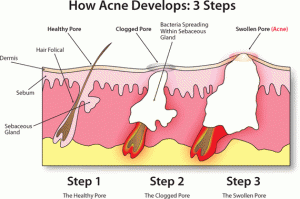
Consider the physical reality of a boxcar scar. It is a steep, defined depression in your tissue that can easily reach 0.5 millimetres into the dermis.
Most over-the-counter chemical exfoliants and light aesthetic peels penetrate barely 0.02 millimetres. You are essentially sweeping the top floor of a building while the foundation is cracked. To level out a deep acne scar, the clinical energy must drive down past the epidermis and vaporise the rigid, tethered collagen bands sitting half a millimetre below the surface.
The Myth Of Zero Downtime
There is a non-obvious trade-off that patients must confront when treating deep texture. We are sold the dream of the “lunchtime laser”—a treatment that promises massive collagen production with absolutely zero downtime.
The real answer is that if you want to physically remodel deep, pitted scars, you must accept significant social downtime. A machine powerful enough to vaporise deep scar tissue will leave your face raw, red, and covered in microscopic grid-like scabs for seven to ten days. Gentle, no-downtime lasers simply do not possess the thermal energy required to melt and rebuild a half-millimetre depression.
The Mechanics Of Rebuilding
A fractional ablative device works by drilling thousands of microscopic columns of heat directly into the scar. It does not remove the entire surface of your skin.
- It leaves bridges of healthy tissue intact between the thermal wounds.
- These healthy bridges serve as the rapid-healing command centres.
- They flood the microscopic holes with fresh, flexible collagen.
As these tiny wounds heal and contract, they pull the edges of the acne scar tighter and push the floor of the crater upward.
The Danger Of Early Sun Exposure
The most common and costly mistake patients make happens in the second week of recovery. The scabs fall off, leaving behind tight, smooth, baby-pink skin. The patient assumes they are fully healed and walks out into the afternoon sun without a hat.
That new pink tissue is completely defenceless. Even fifteen minutes of unprotected UV exposure on freshly vaporised skin will trigger severe post-inflammatory hyperpigmentation. The crater might be shallower, but it will turn into a dark brown blotch that is vastly harder to camouflage than the original scar.
Healing a scarred face is not a gentle process of polishing. It is a demanding, architectural project of tearing down ruined structures and forcing the body to lay new bricks. When you finally accept the necessary weeks of redness and the strict discipline of recovery, you stop chasing miracles and start doing the real work of erasing history.