






In a rapidly evolving technology environment, foundational knowledge of IT infrastructure, networking, and security is essential for any professional looking to establish or advance a career in information technology. CompTIA certifications have become industry standards for validating these core competencies. Among the most recognized credentials are CompTIA A+, CompTIA Network+, and CompTIA Security+.
These certifications provide a structured learning path that prepares candidates to handle real-world IT challenges, from troubleshooting hardware issues to securing networks against emerging threats. For learners seeking practice questions and exam simulations, resources like Exam-Labs.com can serve as valuable study aids to reinforce understanding of exam objectives.
Understanding CompTIA A+ Certification
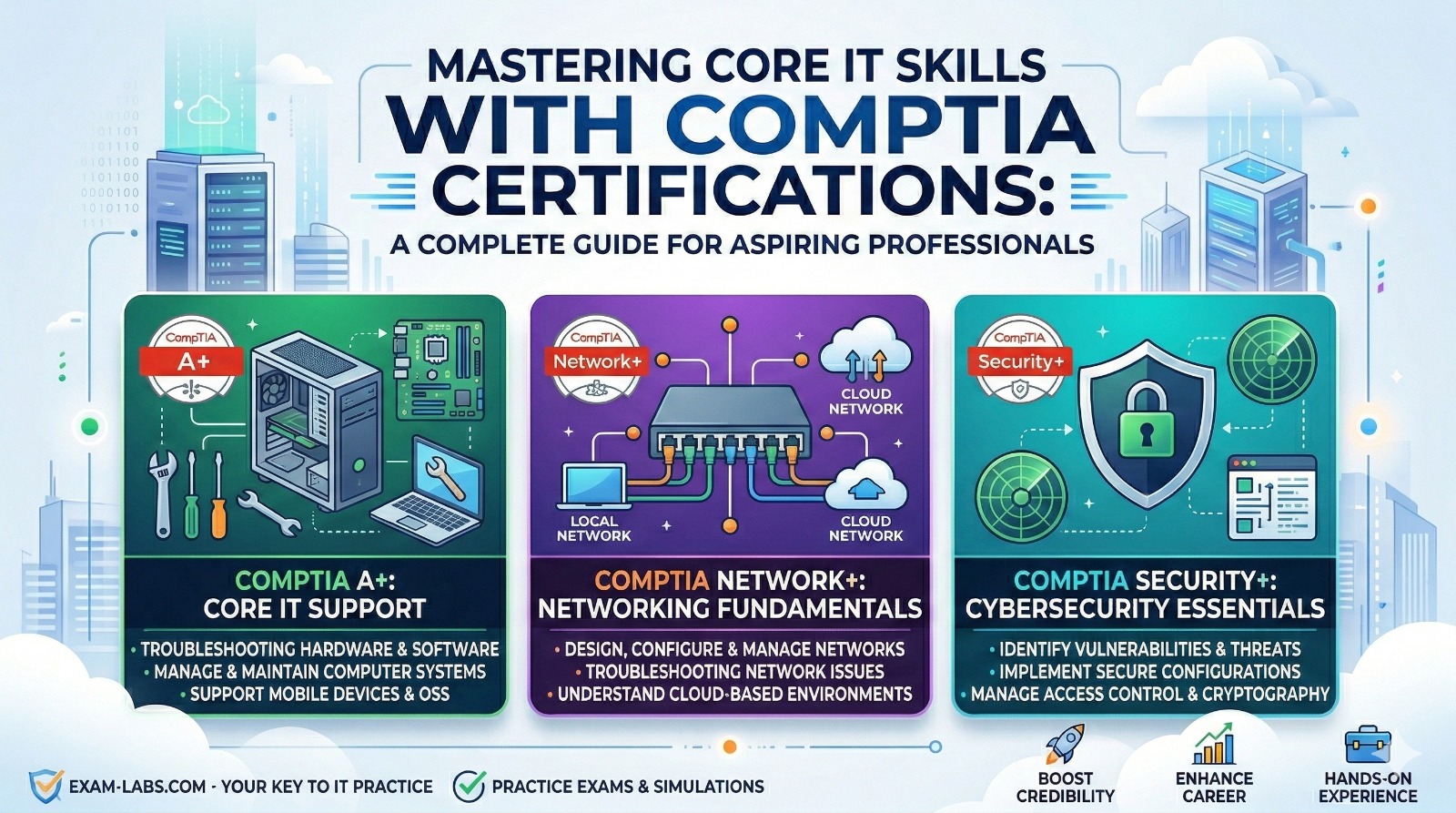
CompTIA A+ is widely regarded as the foundational certification for IT support professionals. It focuses on entry-level skills required to manage and maintain computer systems, mobile devices, and operating systems. The A+ curriculum covers hardware components, software installation, configuration, basic network connectivity, and troubleshooting common issues. It also introduces essential operational procedures, such as safety measures, professionalism, and communication in technical environments.
Professionals who earn the A+ credential demonstrate a solid grasp of everyday tasks in IT support roles, making them well-suited for jobs such as help desk technician, technical support specialist, and field service technician. A+ certified candidates are expected to troubleshoot system failures effectively, install and configure operating systems, and support users across a variety of devices. The certification consists of two exams that test both conceptual knowledge and practical application of skills.
Learn more: https://www.exam-labs.com/certification/CompTIA-A-plus
Why CompTIA Network+ Matters
Following A+, CompTIA Network+ is the next logical step for those interested in deeper networking knowledge. This certification validates the ability to design, configure, manage, and troubleshoot wired and wireless networks. In today’s interconnected world, networking skills are fundamental for IT professionals who work with local area networks, wide area networks, cloud-based environments, and hybrid systems.
Network+ covers essential topics such as network architecture, network operations, security fundamentals, infrastructure components, and network troubleshooting. Candidates learn how to interpret network diagrams, understand network protocols, implement IPv4 and IPv6 addressing schemes, and support various topologies and technologies. The exam also emphasizes hands-on skills, preparing individuals to handle real-world network challenges that arise in business and enterprise environments.
Click here: https://www.exam-labs.com/certification/CompTIA-Network-plus
Advancing with CompTIA Security+
As cybersecurity becomes increasingly critical across all industries, CompTIA Security+ validates essential skills for protecting systems, networks, and data from threats. Security+ builds on foundational knowledge to focus specifically on risk management, threat analysis, incident response, and secure network architecture.
Candidates preparing for Security+ gain expertise in identifying vulnerabilities, implementing secure configurations, managing access control, and responding to security incidents. The exam covers aspects of cryptography, identity management, governance policies, and enterprise security solutions. By mastering these topics, professionals demonstrate their ability to protect IT environments against evolving cyber threats.
Benefits of CompTIA Certification Pathway
Pursuing the sequential path of A+, Network+, and Security+ offers numerous benefits to IT professionals and organizations alike. For individuals, these certifications serve as credible validation of skills that employers recognize globally. The progression from general IT fundamentals to advanced networking and security concepts enables professionals to build layered expertise that aligns with diverse job roles and career aspirations.
These credentials also help learners develop both theoretical knowledge and practical problem-solving abilities. As each certification includes performance-based questions and scenario-driven assessments, candidates refine their capacity to apply concepts in real-world situations. This practical orientation ensures that certified professionals are job-ready and equipped to handle daily operational challenges.
Integrating Learning with Real-World Practice
Successful certification preparation involves more than memorization of facts. Candidates are encouraged to engage with hands-on labs, practice exams, and real-life scenarios that emulate workplace challenges. Using practice resources and simulated questions helps reinforce understanding and builds confidence ahead of exam day. By approaching certification preparation with both practical experience and conceptual understanding, learners enhance retention and performance.
Regularly reviewing case studies, participating in community forums, and collaborating with peers can further strengthen comprehension. Building a habit of continuous learning ensures that certified professionals remain current with industry trends, emerging vulnerabilities, and new technological solutions. Real-world practice exercises also help bridge the gap between academic study and workplace application, making certifications even more valuable.
Career Opportunities with CompTIA Certifications
Earning A+, Network+, and Security+ unlocks a range of job opportunities across the IT industry. Entry-level roles such as help desk support and technical support specialist often require A+ certification as a baseline. Network+ opens doors to positions involving network configuration, management, and troubleshooting, while Security+ prepares candidates for roles focused on risk mitigation and defense strategies.
Many professionals pursue these certifications as stepping stones toward more advanced credentials and specialized career paths. Whether aspiring to become network engineers, cybersecurity analysts, or IT managers, building on CompTIA credentials enhances both expertise and employability. Employers across sectors value these certifications for the practical knowledge and problem-solving skills they represent.
Frequently Asked Questions
What level of experience do I need before starting with CompTIA A+?
CompTIA A+ is designed for beginners and does not require prior professional experience, although familiarity with basic computer concepts is helpful.
Can I take Network+ without earning A+ first?
Yes, CompTIA does not mandate a certification sequence, but A+ provides foundational knowledge that can make Network+ training more approachable.
How long is the Security+ certification valid?
Security+ certification typically requires renewal every three years through continuing education or reexamination to demonstrate ongoing competency.
Are these certifications recognized globally?
Yes, CompTIA certifications are internationally recognized and respected by employers across IT industries worldwide.
Do these certifications help with salary advancement?
Many employers offer higher compensation for certified professionals, as certifications validate skills and expertise relevant to key job responsibilities.
Conclusion
CompTIA certifications such as A+, Network+, and Security+ offer a structured and progressive pathway for aspiring IT professionals to develop essential technical skills. Starting with core hardware and software knowledge, advancing through networking fundamentals, and culminating in cybersecurity expertise, this certification journey equips learners to handle a wide range of technology challenges. Individuals who pursue these credentials can demonstrate practical competency that aligns with real-world job requirements, making them highly attractive to employers.
By combining hands-on practice, conceptual study, and exam preparation strategies, candidates build confidence and readiness for real workplace scenarios. Organizations benefit from certified professionals who can manage systems efficiently, safeguard network infrastructures, and respond to security incidents with informed solutions.