

![[Review] Onggii Opens 3rd Outlet at Square 2, Brings Korean Comfort Food like Gomtang and Galbi Jjim to Novena - Alvinology](https://alvinology.com/wp-content/uploads/2026/10/WhatsApp-Image-2026-10-28-at-1.51.05-AM-110x110.jpeg "[Review] Onggii Opens 3rd Outlet at Square 2, Brings Korean Comfort Food like Gomtang and Galbi Jjim to Novena")

![[Review] Osteria Mozza's New Home at ION Orchard Brings a Different Take on Pizza, Pasta and Italian Comfort Food - Alvinology](https://alvinology.com/wp-content/uploads/2026/10/osteria-mozza-11-110x110.jpg "[Review] Osteria Mozza's New Home at ION Orchard Brings a Different Take on Pizza, Pasta and Italian Comfort Food")
![[Review] HONOR X9e Pro Lands in Singapore with an 11,000mAh Battery That Doubles as a Power Bank - Alvinology](https://alvinology.com/wp-content/uploads/2026/10/honor-9xe-purple-06-110x110.jpg "[Review] HONOR X9e Pro Lands in Singapore with an 11,000mAh Battery That Doubles as a Power Bank")
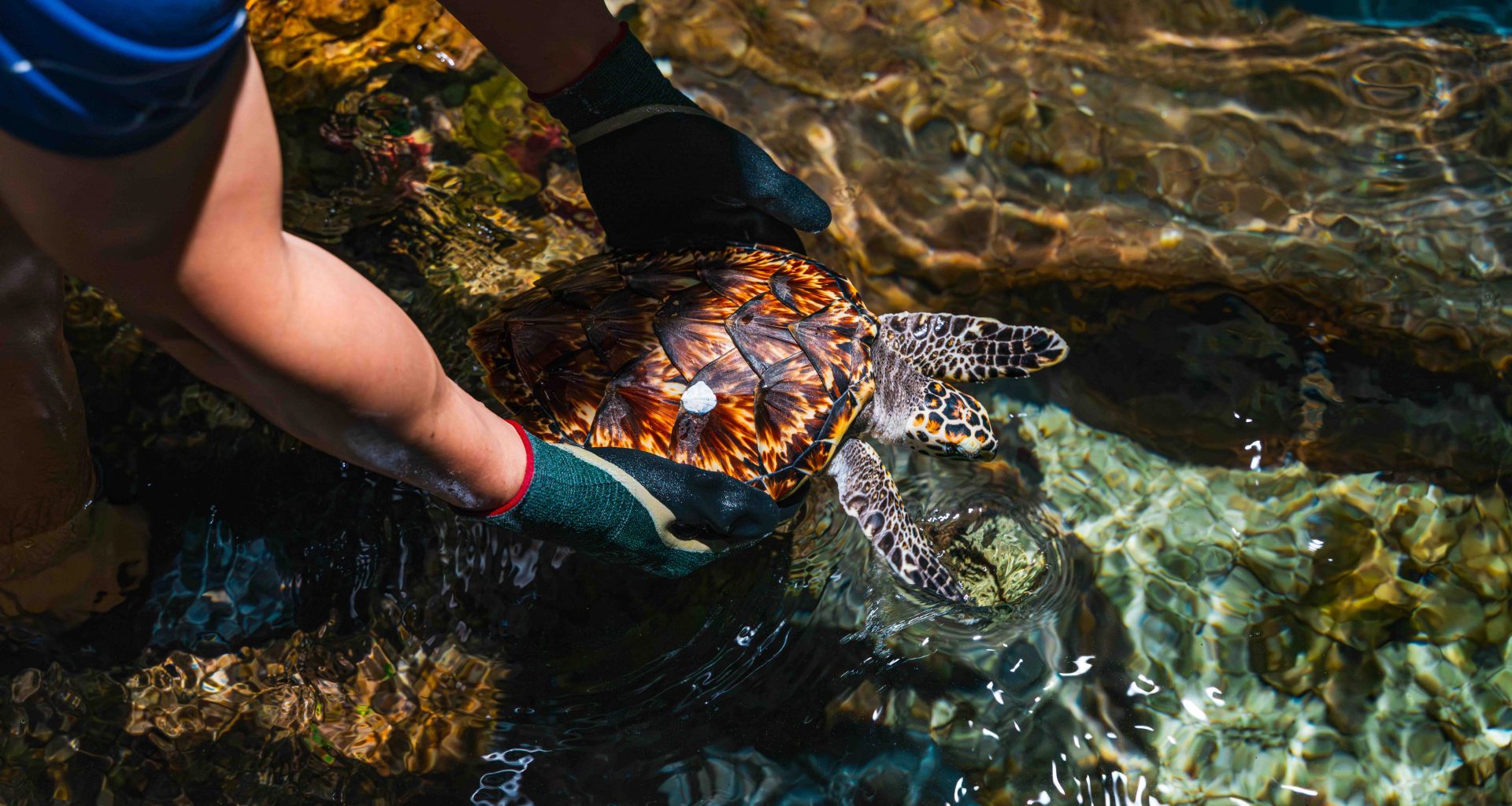

Singapore Oceanarium and the National Parks Board have joined forces to support the conservation of critically endangered Hawksbill turtles through an ongoing headstarting programme designed to improve the hatchlings’ survival during their most vulnerable stage of life.
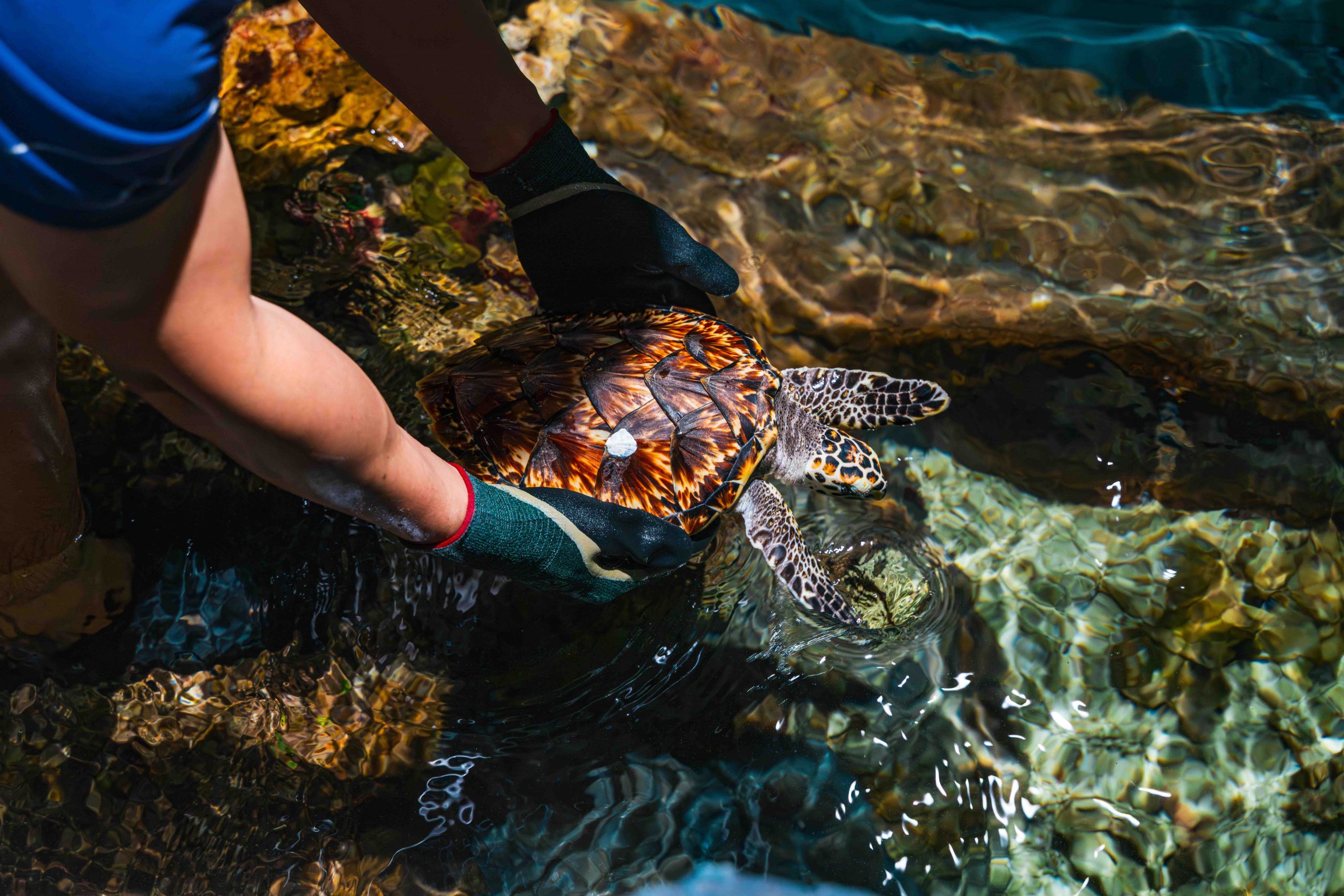
The partnership saw Singapore Oceanarium receive eight Hawksbill turtle hatchlings, identified as H12 to H19, in October 2025 after they hatched at NParks’ turtle hatchery on Small Sister’s Island. Since arriving at Singapore Oceanarium, the hatchlings have undergone quarantine, veterinary assessments, and specialised early-life care under expert supervision.
After six months behind the scenes, the turtles have now been moved to a public-facing habitat at the Horizontal Migration Zone, where visitors can observe them while learning more about marine conservation efforts in Singapore. The turtles will continue to remain under Singapore Oceanarium’s care until they are assessed to have a stronger chance of survival in the wild before eventually being released.
The programme combines Singapore Oceanarium’s expertise in marine animal care, public education, and research with NParks’ work in protecting Singapore’s native biodiversity. Together, both organisations aim to raise awareness about marine turtle conservation and the long-term challenges facing these endangered animals.
Hawksbill turtle is listed as Critically Endangered on the International Union for Conservation of Nature Red List. Survival rates for hatchlings reaching adulthood are estimated to range between one in 1,000 and one in 10,000 due to threats such as predation, habitat loss, pollution, and other human-related dangers. The headstarting programme helps improve the turtles’ odds by allowing them to grow larger and stronger before release.
This latest effort builds on an earlier collaboration launched in 2019 by the former S.E.A. Aquarium together with NParks, supported by the Marine Turtle Working Group and Friends of Marine Park. During that first phase, 10 hatchlings were reared under specialist care before being gradually released in 2023 and 2024.
Three turtles from the earlier cohort were fitted with satellite tags to help researchers track their movements after release. Monitoring data showed two turtles heading south towards Indonesia shortly after being released at Sisters’ Islands Marine Park, while another travelled north through the Malacca Straits towards southern Thailand.
From 11 May 2026, the eight new hatchlings will also become part of Singapore Oceanarium’s educational outreach efforts, allowing visitors to learn more about Singapore’s marine biodiversity, the threats sea turtles face, and the conservation work needed to support wildlife recovery.
To prepare the turtles for eventual release, their care has been carefully designed to mimic natural conditions and minimise human interaction. This includes natural feeding practices and the installation of heavily tinted privacy films around their habitat to prevent the hatchlings from becoming overly familiar with humans.
Based on previous growth patterns, the turtles may be considered for release after around 15 to 20 months, depending on their overall condition, health, and development. Selected turtles may also be fitted with satellite and flipper tags in the future to support post-release monitoring and research, following established animal welfare guidelines.
Researchers hope that data collected during the turtles’ development and after their release will contribute to future conservation strategies and strengthen efforts to protect Singapore’s marine turtle population for generations to come.